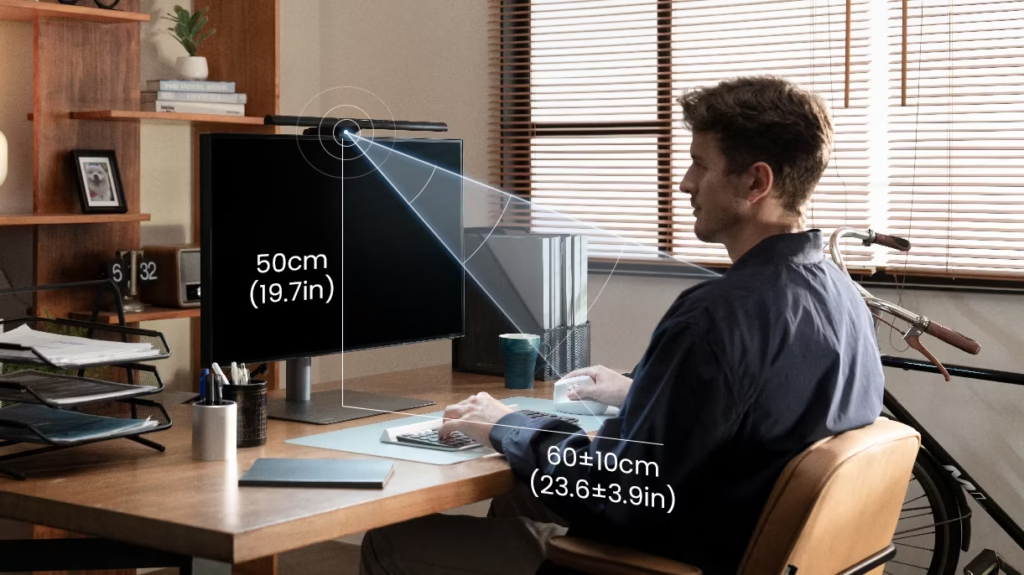
Ever noticed your eyes feel tired even when you didn’t really work that hard?
Most people blame screen time.
But the real cause is usually your lighting position, not the computer.
A desk lamp placed incorrectly forces your eyes to constantly refocus, fight glare, and adjust brightness levels. Your brain interprets that as mental fatigue — which is why you feel exhausted after sitting.
The good news:
You don’t need new glasses, blue-light blockers, or expensive monitors.
You just need the 45° lighting rule.
Key Takeaways
- Place your desk lamp at a 45-degree angle to your workspace
- Position the lamp opposite your writing hand
- Keep the bulb below eye level
- Combine task lighting with room lighting
- Use adjustable arm lamps whenever possible
- Balanced brightness prevents eye fatigue
Understanding the 45° Lighting Rule and Why It Matters
The 45° lighting rule means your lamp should never shine directly toward your eyes or screen.
Instead, it should hit your desk from the side at an angle.
Why this works:
Your eyes are constantly adjusting to brightness differences. When a light hits your screen head-on, your pupils repeatedly expand and contract. That creates eye strain and headaches.
The angled lighting spreads light evenly across your workspace.
The Science Behind Eye Strain
Eye strain happens when your eyes overwork to interpret contrast and glare.
Bad lighting causes:
- blurred vision
- dry eyes
- headaches
- neck tension
- afternoon fatigue
Proper lighting dramatically reduces this because your eyes remain in a relaxed focus state.
How Proper Lamp Position Protects Long-Term Vision
Correct lighting doesn’t just make you comfortable today.
It prevents:
- chronic eye fatigue
- screen headaches
- posture slouching
- late-day productivity crashes
Many people think they are tired from working.
They are actually tired from visual stress.
Step-by-Step: Setting the 45° Lamp Position
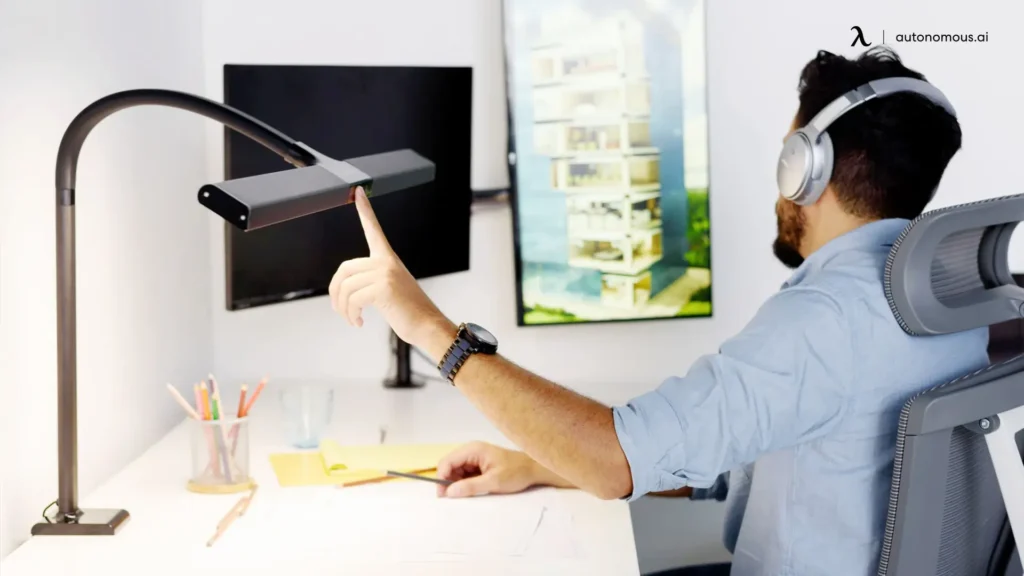
- Place the lamp beside your monitor
- Aim the light toward your keyboard or desk surface
- Keep the bulb slightly below eye level
- Angle the head downward (not forward)
For Computer Work
Position the lamp 20 inches to the side or slightly behind the monitor to eliminate screen reflections.
For Writing or Reading
Place the lamp behind your shoulder so light falls across the paper.
Right-Handed vs Left-Handed Placement
- Right-handed → lamp on the left side
- Left-handed → lamp on the right side
This prevents your hand from casting shadows on your work.
Best Distance and Height
Your lamp should:
- be above desk level
- below eye level
- never visible directly in your field of vision
If you can see the bulb while sitting normally → it is positioned wrong.
Best Types of Desk Lamps for Eye Comfort
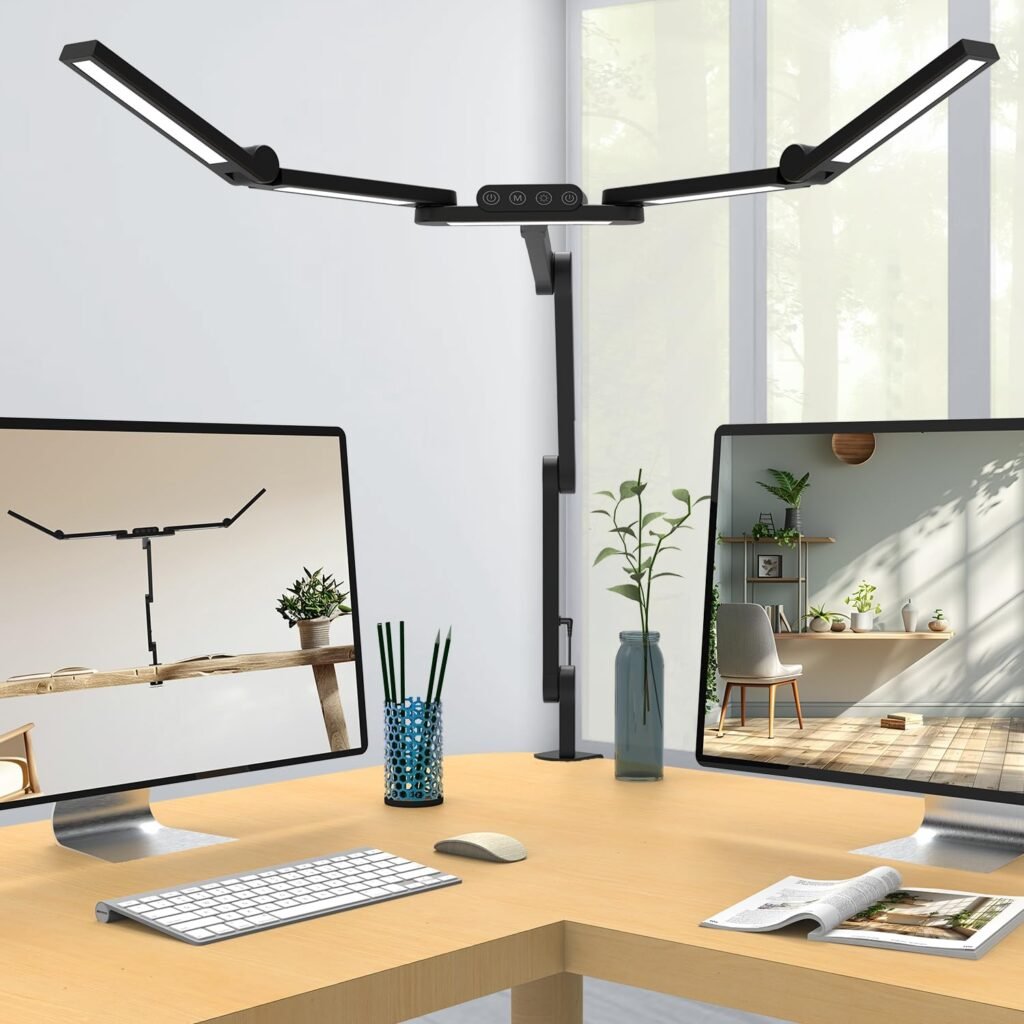
Adjustable LED Arm Lamps
Best overall choice.
You can precisely aim the light where needed.
Architect-Style Lamps
Excellent for detailed work and reading.
Clamp-On Lamps
Perfect for small desks or laptop stations.
Gooseneck Lamps
Most flexible positioning and easiest to fine-tune.
Features Your Lamp SHOULD Have
- Adjustable arm
- Dimmable brightness
- 3000K–4000K color temperature
- Diffused light cover
- Anti-glare head
Avoid extremely bright white (5000K+) bulbs — they cause fatigue.
Common Mistakes That Cause Eye Strain
1. Lamp in Front of the Screen
Creates direct glare.
2. Lamp Above Your Head
Causes downward shadows and forces eye refocusing.
3. Light Too Close to Your Eyes
Harsh brightness = headaches.
4. No Ambient Room Lighting
A dark room + bright screen is the #1 cause of eye fatigue.
Your eyes constantly adjust between the glowing monitor and the dark surroundings. This forces your eye muscles to keep refocusing, which leads to headaches, blurred vision, and that drained feeling after work. Soft room lighting behind you balances brightness levels and immediately reduces strain.
If your workspace also causes neck or back pain, you should read this:
how to make your desk more comfortable
Why Ambient Lighting Matters
Your desk lamp should not be your only light source.
You need soft background room lighting so your eyes are not switching between bright and dark environments constantly.
This dramatically improves focus and reduces afternoon tiredness.
Conclusion
The best desk lamp position for eye comfort is simple:
Side-angle, below eye level, and never facing your screen.
The 45° lighting rule is one of the easiest workspace upgrades you can make. It costs nothing, takes two minutes, and instantly reduces eye strain.
Most people upgrade chairs first.
But lighting is often the real productivity fix.
MarketPlazaNow.com participates in affiliate programs and may earn a commission from qualifying purchases. This article is for informational purposes only and does not replace professional advice.