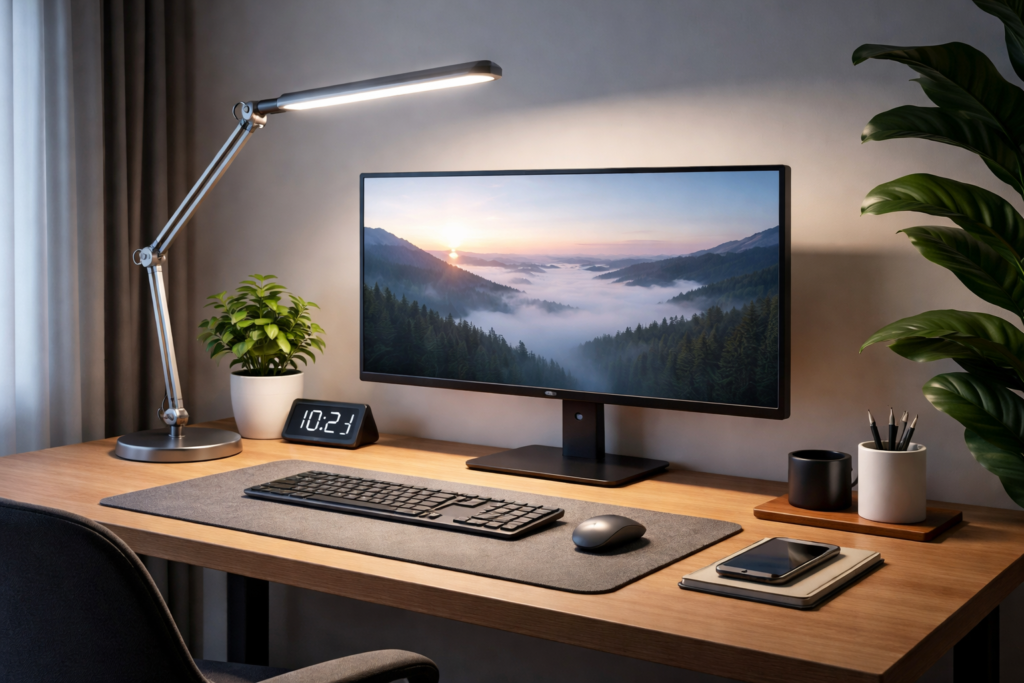
Have you ever noticed your eyes getting tired, your head starting to ache, or your focus slipping after a couple of hours at your desk?
You’re not alone—and most people don’t realize that poor lighting is often the reason.
The right desk lamp doesn’t just help you see better. It can reduce eye strain, improve your concentration, and make long work sessions feel much easier on your body.
In this guide, you’ll learn exactly what to look for in the best desk lamp for eyes, how lighting affects your health, and how to set up your workspace the right way.
Key Takeaways
- Proper lighting reduces eye strain, headaches, and fatigue
- Adjustable brightness helps match lighting to your task
- Flicker-free LEDs protect your eyes during long sessions
- Color temperature impacts focus and sleep quality
- Smart placement eliminates glare and improves comfort
The Science of Lighting and Eye Health
Lighting plays a bigger role in your daily comfort than most people think. If your lighting is too dim, too harsh, or poorly positioned, your eyes have to work harder—and that leads to fatigue fast.
How Poor Lighting Impacts Productivity
When your lighting setup isn’t right, your body feels it.
Common issues include:
- Eye strain and blurred vision
- Frequent headaches
- Difficulty focusing
- Neck and shoulder tension
Over time, these small problems add up and start affecting your productivity and energy levels.
If you’re already dealing with discomfort, you may also want to read how to sit without lower back pain while working at a desk to improve your overall setup.
The Role of Color Temperature and Flicker
Not all light is the same. Two key factors make a big difference:
Color Temperature (Kelvin):
- Warm light (2700K–3000K): relaxing, better for evenings
- Cool light (5000K–6500K): energizing, ideal for focus
Flicker:
Even if you can’t see it, flickering light can strain your eyes over time.
Choosing a flicker-free LED lamp with adjustable color temperature can dramatically improve comfort during long work sessions.
Types of Desk Lamps That Are Best for Your Eyes
There are a few standout options when it comes to eye-friendly lighting.
LED Task Lamps with Adjustable Brightness
These are one of the most popular choices—and for good reason.
They allow you to control brightness based on what you’re doing, whether it’s reading, typing, or working on detailed tasks.
Benefits include:
- Energy efficiency
- Adjustable light intensity
- Focused lighting exactly where you need it
Full-Spectrum Lamps for Natural Light
Full-spectrum lamps mimic natural daylight, which can feel easier on your eyes.
They’re especially helpful if you work indoors for long hours or don’t get much natural light during the day.
Benefits include:
- Reduced eye fatigue
- Better mood and focus
- More natural lighting environment
Asymmetric Lighting Designs to Reduce Glare
Glare is one of the biggest causes of eye strain—especially if you’re staring at a screen all day.
Asymmetric lamps are designed to direct light away from your eyes and screen reflections.
Benefits include:
- Less screen glare
- Better visibility
- More comfortable viewing angles
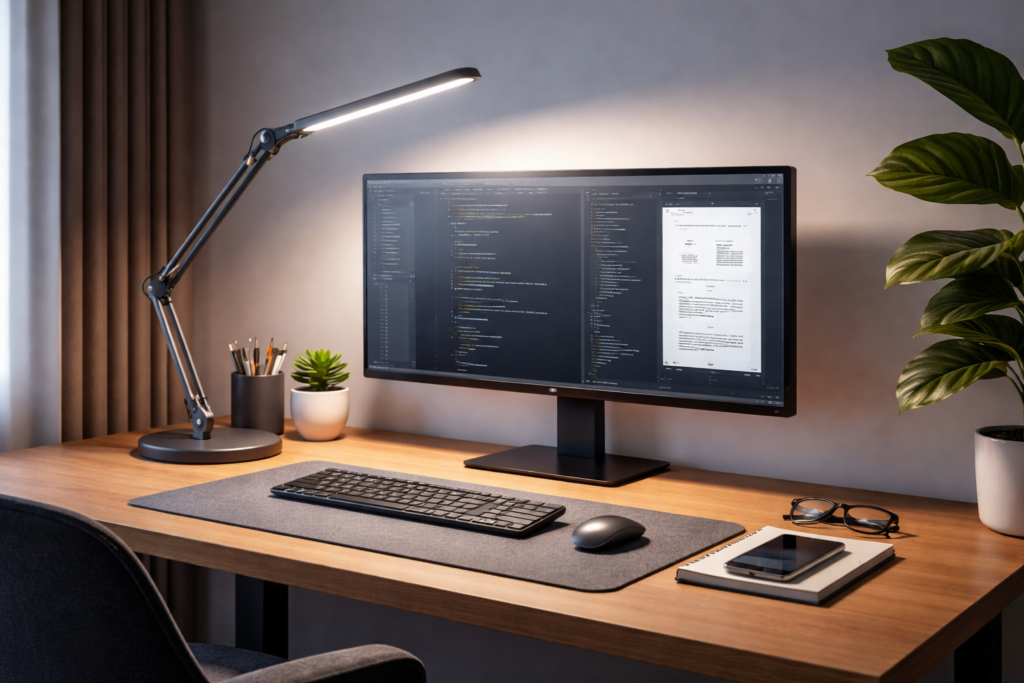
desk lamp positioned to reduce glare on computer screen in modern workspace
Essential Features to Look for in Eye-Friendly Lighting
If you want to choose the best desk lamp for your eyes, these features matter the most.
Color Rendering Index (CRI)
CRI measures how accurately colors appear under a light.
Look for:
- CRI of 90 or higher for the most natural color visibility
This is especially important if you read, write, or work with visuals.
Adjustable Color Temperature
Being able to switch between warm and cool lighting is a game-changer.
- Use cooler light during the day for focus
- Switch to warmer light at night to relax your eyes
Flicker-Free Technology and Blue Light Reduction
These two features are essential for long-term comfort.
Flicker-free lighting:
- Prevents hidden eye strain
- Reduces fatigue over time
Blue light control:
- Helps protect sleep cycles
- Reduces nighttime eye stress
Why Flicker Matters
Even invisible flicker can cause:
- Eye fatigue
- Headaches
- Difficulty concentrating
A high-quality LED lamp eliminates this issue completely.
Managing Blue Light at Night
If you work late, this is critical.
Use lamps with:
- Night mode
- Warm light settings
This helps your body wind down naturally.
Practical Tips to Optimize Your Desk Setup
Even the best lamp won’t help if it’s placed incorrectly.
Position Your Lamp Correctly
- Place the lamp on the opposite side of your dominant hand
- Keep light out of your direct line of sight
- Angle it to avoid screen reflections
If you’re unsure about positioning, check out desk lamp distance from monitor: the ideal placement for eye comfort.
Balance Ambient and Task Lighting
Don’t rely on one light source.
- Use overhead lighting for general brightness
- Use your desk lamp for focused work
Too much contrast between lights can strain your eyes.
Combine Lighting with Ergonomic Setup
Lighting works best when paired with good posture.
- Keep your monitor at eye level
- Avoid placing screens directly in front of windows
- Use adjustable lamps for flexibilit
You can also improve your full setup by exploring ergonomic home office setup ideas.
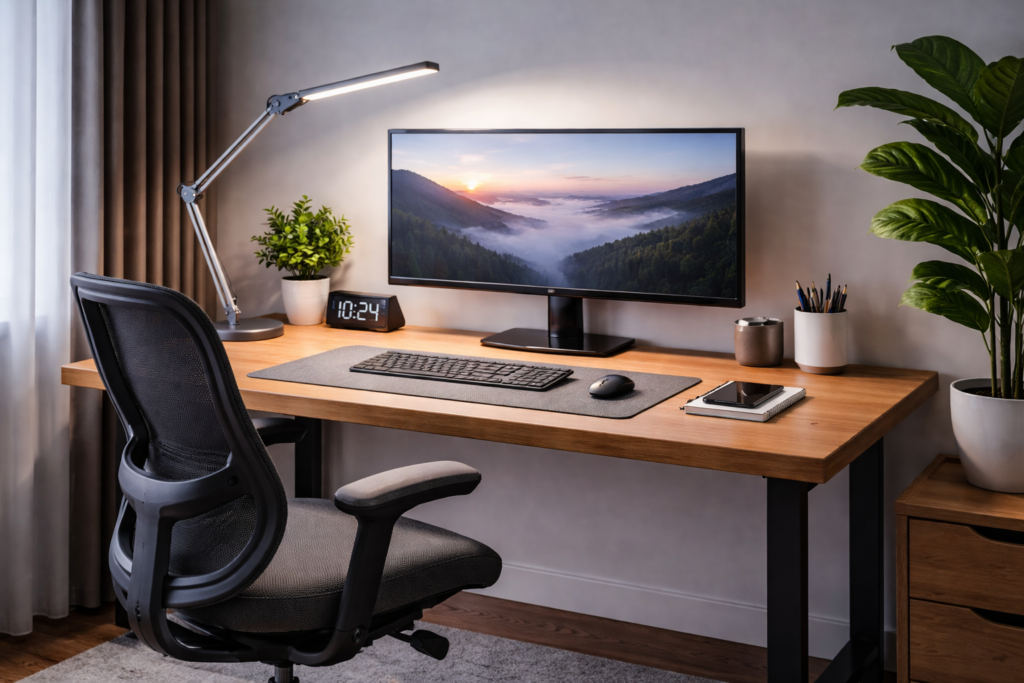
ergonomic desk setup with proper lighting positioning and monitor alignment
Conclusion
The right desk lamp can completely change how you feel at your desk.
Instead of dealing with eye strain, headaches, and fatigue, you can create a workspace that supports your focus, comfort, and long-term health.
When choosing the best desk lamp for eyes, focus on:
- Adjustable brightness and color temperature
- Flicker-free technology
- Proper positioning in your workspace
A small upgrade like this can make a big difference in your daily productivity.
Disclaimer
This article is for informational purposes only and does not constitute medical advice. If you experience persistent eye strain, headaches, or vision problems, consult a qualified healthcare professional.