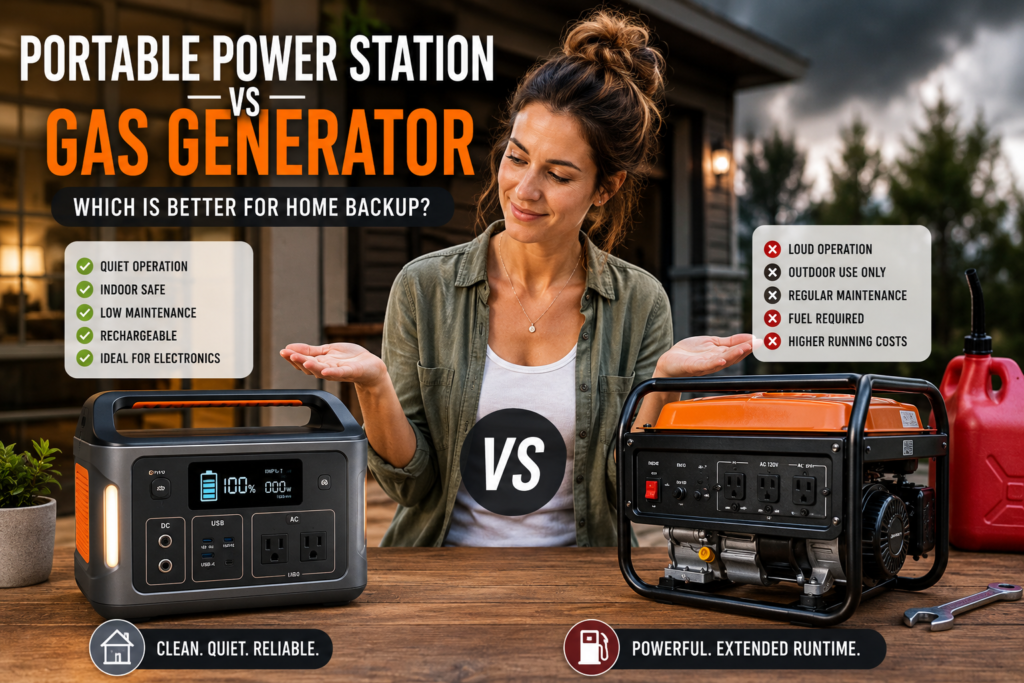
Compare portable power stations and gas generators for home backup power. Learn the pros, cons, costs, safety considerations, and which option may be best for your needs.
When the power goes out, having a backup power source can make a huge difference. Whether you’re trying to keep your refrigerator running, stay connected online, or simply power essential devices, two popular options stand out: portable power stations and gas generators.
But which one is better for home backup?
The answer depends on your budget, power needs, and how you plan to use the equipment. In this guide, we’ll compare portable power stations and gas generators to help you decide which option may be right for your household.
What Is a Portable Power Station?
A portable power station is a rechargeable battery-powered device that stores electricity and provides power through AC outlets, USB ports, and other connections.
If you’re looking for specific recommendations, see our guide to the Best Portable Power Stations for Home Backup & Emergencies (2026 Guide).
Most modern units can be charged using:
- Standard wall outlets
- Vehicle charging ports
- Solar panels
Portable power stations have become increasingly popular because they are quiet, easy to operate, and safe for indoor use.
What Is a Gas Generator?
A gas generator uses gasoline, propane, or diesel fuel to generate electricity.
Generators can typically provide more power than portable power stations and can run for extended periods as long as fuel is available.
However, generators require regular maintenance and must always be used outdoors due to carbon monoxide risks.
Noise Comparison
Portable Power Station
One of the biggest advantages is quiet operation.
Most portable power stations operate silently or with only minimal cooling fan noise.
Gas Generator
Generators can be very loud, especially larger models.
Some inverter generators are quieter than traditional generators, but most still produce noticeable engine noise.
Winner: Portable Power Station
Safety Comparison
Portable Power Station
Portable power stations are generally safe for indoor use.
There are:
- No exhaust fumes
- No gasoline storage requirements
- No carbon monoxide concerns
Gas Generator
Gas generators must never be operated indoors, in garages, or near windows.
Improper use can lead to dangerous carbon monoxide exposure.
Winner: Portable Power Station
Power Output Comparison
Portable Power Station
Portable power stations are ideal for:
- Phones
- Laptops
- Routers
- CPAP machines
- Small appliances
- Lighting
Higher-capacity models can also power refrigerators and freezers for limited periods.

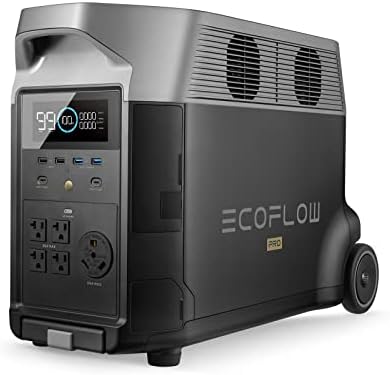

If you’re looking for specific recommendations, see our guide to the best portable power stations for home backup.
Gas Generator
Generators generally provide much higher power output.
They can support:
- Refrigerators
- Sump pumps
- Air conditioners
- Power tools
- Multiple appliances simultaneously
Winner: Gas Generator
Maintenance Requirements
Portable Power Station
Maintenance is minimal.
Typical maintenance includes:
- Keeping batteries charged
- Storing in a dry environment
- Periodic testing
Gas Generator
Generators require:
- Oil changes
- Fuel stabilizers
- Spark plug replacement
- Engine maintenance
Winner: Portable Power Station
Fuel and Operating Costs
Portable Power Station
Once purchased, operating costs are extremely low.
Many units can even be recharged using solar panels.
Gas Generator
Generators require ongoing fuel purchases.
Fuel expenses can increase significantly during long outages.
Winner: Portable Power Station
Best Choice for Remote Work
If your primary goal is keeping your:
- Internet connection active
- Laptop charged
- Phone powered
A portable power station is often the simplest solution.
Many professionals working from home prefer portable power stations because of their quiet operation and indoor safety.
Best Under Desk Walking Pads for Home Office Productivity (2026 Guide)
Best Choice for Whole-Home Backup
If you need to power:
- Multiple refrigerators
- Large appliances
- HVAC equipment
A gas generator may be the better option.
Some homeowners even install standby generators for automatic backup power.
Which Option Is Right for You?
A portable power station may be ideal if:
- You want quiet operation
- You work from home
- You need power for electronics
- You prefer low maintenance
- You want indoor-safe backup power
A gas generator may be ideal if:
- You need maximum power output
- You experience frequent long outages
- You want to run large appliances
- You don’t mind regular maintenance
Final Thoughts
Both portable power stations and gas generators can provide valuable backup power during emergencies.
For many households, portable power stations offer a safer, quieter, and easier solution for powering essential electronics and staying connected during outages.
For larger power demands and extended outages, a gas generator may provide the extra capacity needed to keep critical appliances running.
The best choice depends on your specific backup power needs, budget, and comfort level with maintenance and fuel storage.
As an Amazon Associate, MarketPlazaNow may earn from qualifying purchases. This comes at no additional cost to you and helps support our content.