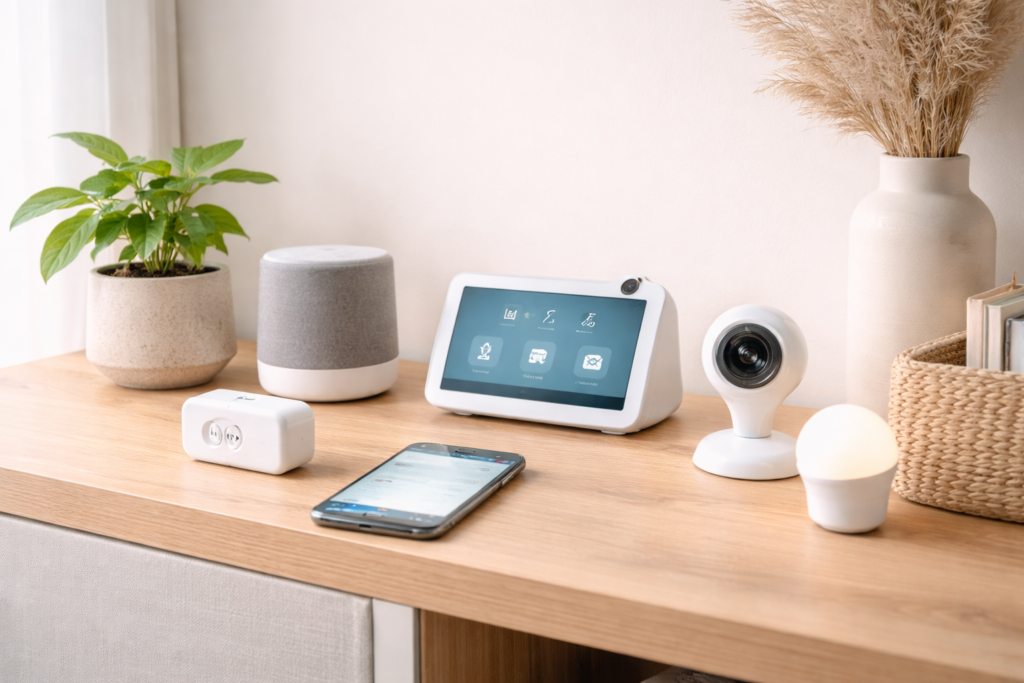
Smart home technology has quickly moved from a luxury concept to an everyday convenience. With connected devices now widely available, homeowners can automate routine tasks, improve energy efficiency, and enhance home comfort with minimal effort.
From managing lighting and temperature to improving home security, smart home gadgets are designed to simplify daily routines. These devices help create a more responsive living environment while saving time and reducing manual tasks.
In this guide, we’ll explore the most useful types of smart home gadgets and how they make everyday life easier.
Key Takeaways
- Smart home gadgets automate everyday household tasks
- Connected devices improve convenience and energy efficiency
- Smart technology enhances home safety and accessibility
- Many smart devices are easy to install and use
- Choosing the right gadgets depends on lifestyle and home needs
The Evolution of Smart Home Technology
Smart home technology has evolved rapidly over the past decade. What was once considered a premium feature is now accessible to many households.
From Luxury to Everyday Convenience
Early smart home systems were expensive and complex. As technology advanced, devices became more affordable, user-friendly, and widely compatible. Today, smart thermostats, lighting systems, and security devices are commonly found in modern homes.
How Smart Homes Transform Daily Routines
Smart homes reduce the need for manual control by automating repetitive tasks. Lighting can adjust automatically, doors can lock remotely, and climate systems can adapt based on schedules or occupancy.
| Device Type | Function | Benefit |
|---|---|---|
| Smart Thermostats | Temperature control | Energy efficiency |
| Smart Lighting | Automated lighting | Convenience |
| Smart Locks | Remote access | Home security |
Understanding Smart Home Gadgets
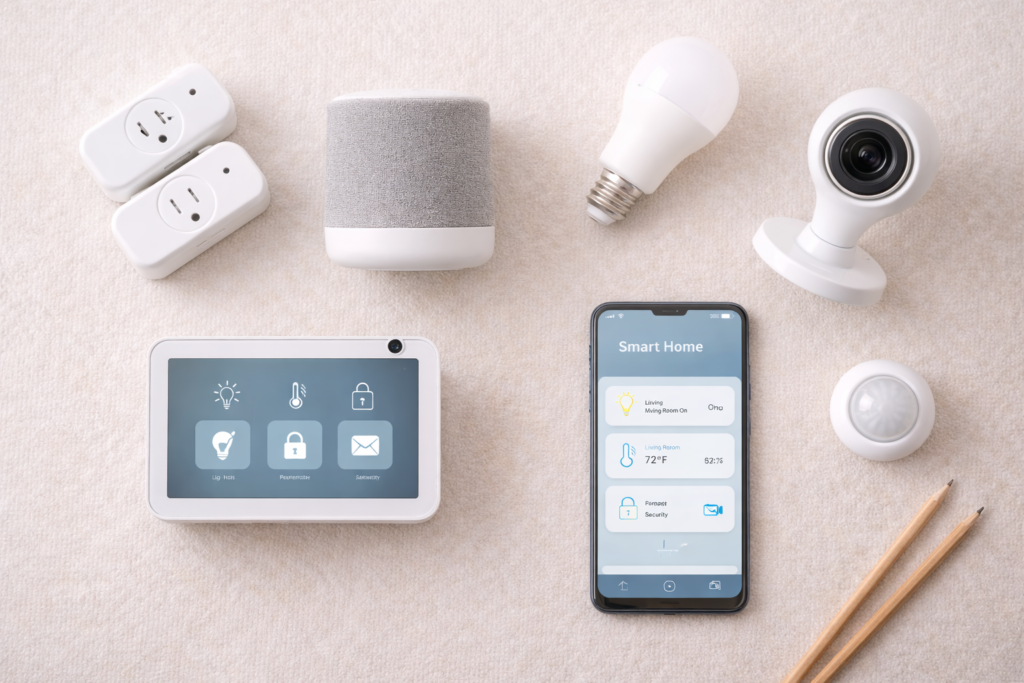
Smart home gadgets are devices that connect to the internet and allow remote or automated control.
What Makes a Home “Smart”
A smart home uses connected devices that can be controlled through a smartphone app, automation schedules, or voice commands. These systems allow users to monitor and manage their home environment more efficiently.
Core Components of a Smart Home Ecosystem
Most smart homes rely on a combination of smart hubs, connected devices, and control interfaces. Common components include smart speakers, lighting systems, thermostats, plugs, and security devices working together as a unified system.
Types of Smart Home Devices for Everyday Convenience
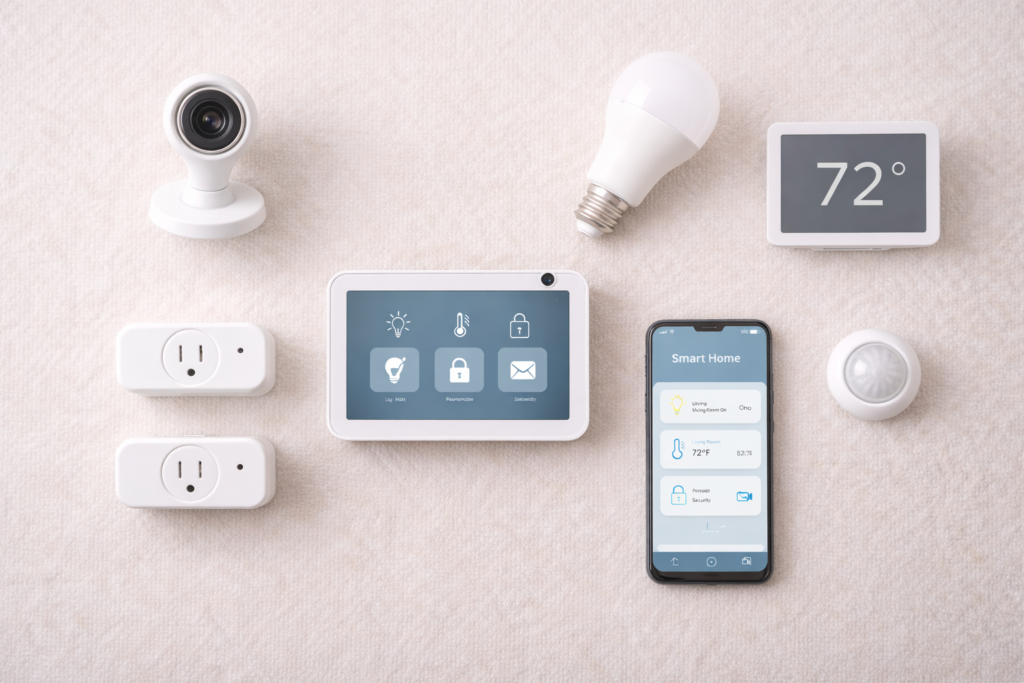
Smart home devices are available in many forms, each designed to improve specific aspects of daily life.
Automatic Lighting Systems
Smart lighting allows users to schedule lights, adjust brightness, and control rooms remotely. This improves convenience while helping reduce unnecessary energy use.
Smart Plugs and Outlets
Smart plugs transform traditional appliances into connected devices. Users can turn devices on or off remotely, set timers, and monitor energy consumption.
Automated Timers and Schedules
Timers and schedules automate routines such as lighting, climate control, and appliance usage. This helps maintain consistency and reduces energy waste.
Motion and Occupancy Sensors
Motion sensors activate lights or alerts when movement is detected. These devices are useful for security and energy efficiency.
Voice-Activated Home Assistants
Voice assistants allow hands-free control of smart devices. Users can manage lighting, temperature, reminders, and entertainment using simple voice commands.
| Device Type | Key Features | Benefits |
|---|---|---|
| Smart Lighting | Scheduling, remote control | Convenience |
| Smart Plugs | Energy monitoring | Efficiency |
| Motion Sensors | Activity detection | Safety |
| Voice Assistants | Voice control | Accessibility |
Key Benefits of Smart Home Integration
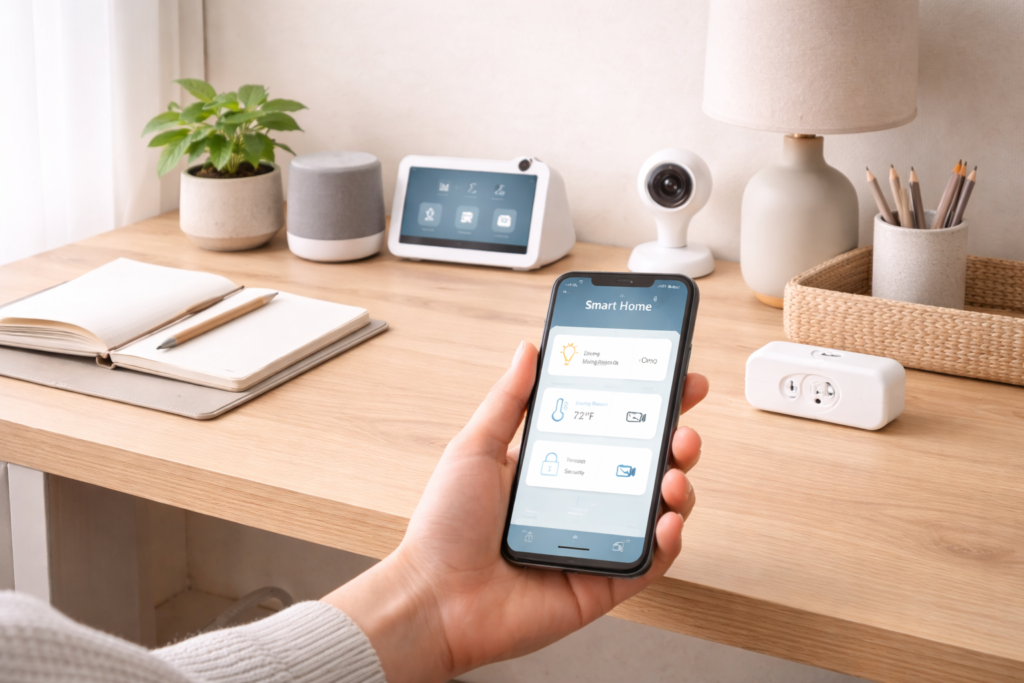
Integrating smart home technology provides practical benefits that extend beyond convenience.
Time-Saving Automation
Automated routines reduce daily manual tasks, allowing homeowners to focus on more important activities.
Remote Access and Control
Smart home systems allow users to manage devices from anywhere using a mobile app. This provides peace of mind when away from home.
Enhanced Home Safety
Connected security devices offer real-time monitoring and alerts, improving overall home safety.
Improved Accessibility
Voice control and automation help make homes more accessible for individuals with limited mobility.
Who Benefits Most from Smart Home Technology
Smart home gadgets are useful for a wide range of users.
| User Group | Primary Benefits |
|---|---|
| Busy professionals | Time savings |
| Families | Convenience and safety |
| Elderly individuals | Accessibility |
| Energy-conscious homeowners | Reduced energy usage |
Energy Efficiency and Cost Savings
[IMAGE 5 – ENERGY SAVINGS IMAGE]
Place directly under this heading
Image suggestion: thermostat or lighting control app on phone, neutral background
Smart home technology helps reduce unnecessary energy consumption.
Reducing Power Consumption Through Automation
Automated systems ensure devices only operate when needed, minimizing wasted energy.
Smart Thermostats and Climate Control
Smart thermostats optimize heating and cooling schedules, helping lower utility costs.
Long-Term Financial Benefits
Lower energy usage and efficient automation can result in long-term savings over time.
How to Choose the Right Smart Home Gadgets
Choosing the right devices ensures a smoother smart home experience.
Assessing Your Lifestyle Needs
Consider which daily tasks could benefit most from automation.
Compatibility and Integration
Ensure devices work with your existing smart home platform.
Security and Privacy Considerations
Look for devices with strong security features and privacy protections.
Budget Planning
Balance functionality with cost when expanding your smart home setup.
Conclusion
Smart home gadgets offer practical solutions for simplifying daily routines, improving comfort, and enhancing home efficiency. With a wide range of devices available, homeowners can customize their smart home experience based on their needs and lifestyle.
As technology continues to advance, smart homes are becoming more accessible and valuable, helping create a more efficient and connected living environment.