If your eyes feel tired, dry, or strained after working at your desk, the problem may not be your screen — it’s your lighting.
Most people use desk lamps that are either too bright, too dim, or poorly positioned. The right brightness level can instantly reduce eye strain and improve focus.
In this guide, you’ll learn exactly how to choose the best desk lamp brightness for eye comfort.
What Is the Best Brightness for a Desk Lamp?
The ideal brightness for a desk lamp is:
- 400–800 lumens for general desk use
- 800–1100 lumens for detailed work
- Adjustable brightness (dimmable is best)
Too bright = glare and eye fatigue
Too dim = eye strain from over-focusing
Why Brightness Matters for Eye Comfort
Your eyes constantly adjust to light levels. When lighting is unbalanced, your eyes work harder than they should.
Good brightness helps:
- Reduce eye fatigue
- Improve focus
- Prevent headaches
- Balance screen contrast
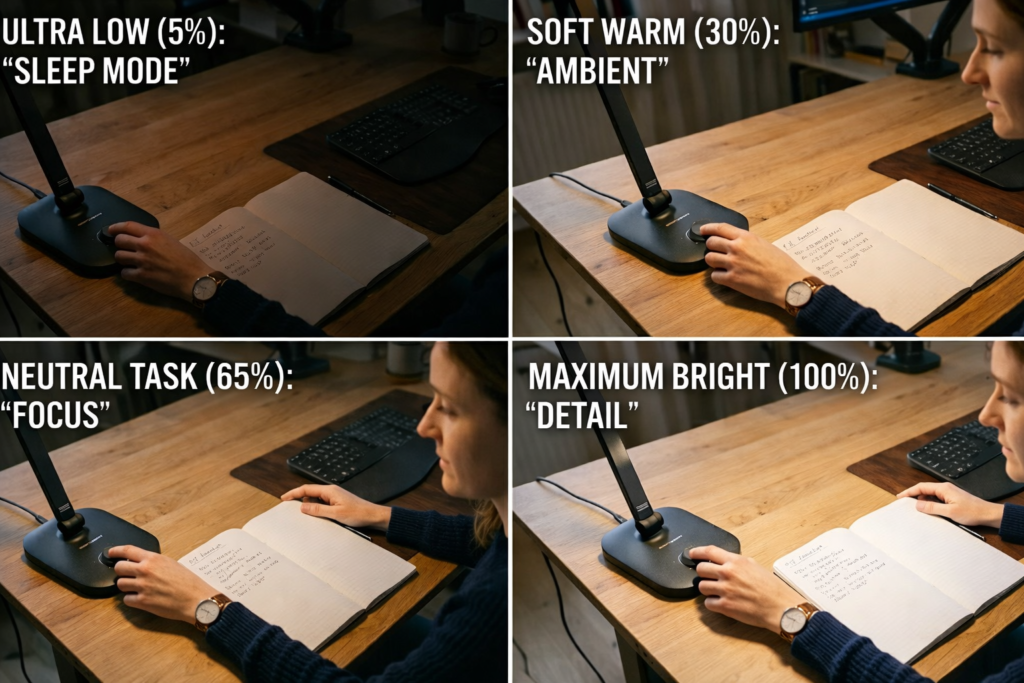
adjustable LED desk lamp brightness levels workspace
Best Type of Desk Lamp for Adjustable Brightness
Look for these features:
- Dimmable LED settings
- Touch or button controls
- Flicker-free lighting
- Warm to neutral color temperature (3000K–4000K)
Avoid:
- Fixed brightness lamps
- Harsh white lighting (5000K+)
Brightness vs Screen Lighting (Important)
Your desk lamp should match your screen brightness, not overpower it.
A common mistake:
- Bright lamp + dim screen = eye strain
- Dim lamp + bright screen = eye strain
Quick Setup Tips
- Position lamp slightly behind your monitor
- Keep light out of direct eye line
- Use dimmable settings throughout the day
- Adjust brightness at night (lower is better)
Final Thoughts
The best desk lamp brightness is not about maximum power — it’s about balance.
A properly adjusted lamp can instantly reduce eye strain, improve comfort, and make your workspace feel more natural.
MarketPlazaNow.com participates in affiliate programs and may earn a commission from qualifying purchases. This content is for informational purposes only.