This post may contain affiliate links. If you purchase through these links, we may earn a small commission at no extra cost to you.
If your eyes feel tired, dry, or strained after long hours at your desk, your lighting setup might be the problem. The right desk lamp can instantly reduce eye fatigue, improve focus, and boost your productivity.
A well-designed lighting setup doesn’t just make your workspace look better—it protects your vision and helps you work longer without discomfort.
Why Your Current Desk Lighting Is Hurting Your Eyes
Most home office setups rely on poor lighting conditions like:
- Overhead lighting that creates glare
- Dim environments that force your eyes to strain
- Harsh LED lights with no adjustment options
This leads to:
- Eye fatigue
- Headaches
- Reduced productivity
If you’re already experiencing discomfort, upgrading your lighting is one of the fastest fixes.
What Makes the Best Desk Lamp for Eye Strain
When choosing a desk lamp, focus on features that support eye comfort:
✔ Adjustable Brightness
Allows you to match lighting to your environment
✔ Color Temperature Control
Switch between warm and cool light depending on time of day
✔ Flicker-Free Technology
Prevents eye irritation and headaches
✔ Anti-Glare Design
Reduces harsh reflections on your screen
💡 Recommended Desk Lamps for Eye Comfort
- Adjustable LED desk lamps with dimming controls
- Lamps with flexible arms for better positioning
- Eye-care lamps with soft diffusion lighting
👉 Check top-rated desk lamps on Amazon here
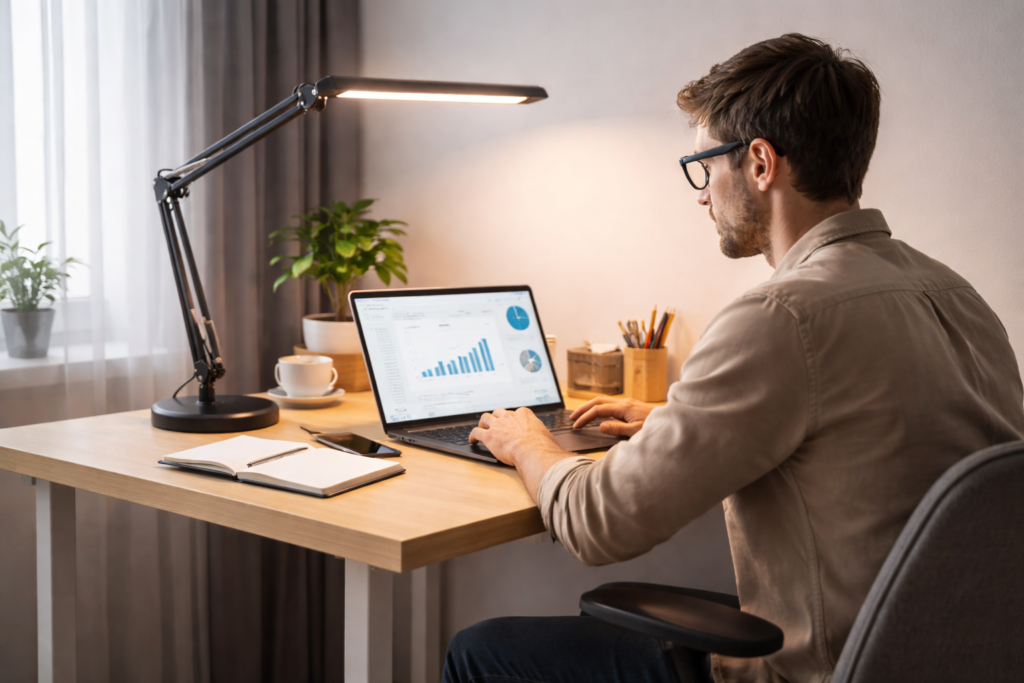
person working at desk with ergonomic lamp reducing eye strain
Best Desk Lamp Placement for Maximum Comfort
Even the best lamp won’t help if it’s placed incorrectly.
✔ Position to the Side
Place your lamp opposite your writing hand to reduce shadows
✔ Avoid Direct Eye Exposure
Light should hit your desk—not your eyes
✔ Reduce Screen Glare
Angle the lamp away from your monitor
👉 For a full breakdown, read this guide on proper desk lighting angles
Complete Lighting Setup for Productivity
A single lamp isn’t always enough. The best setups include:
- Ambient lighting (room lighting)
- Task lighting (desk lamp)
- Natural light when possible
Combining these reduces eye strain and improves focus throughout the day.
👉 You can also upgrade your full workspace here
Small Changes That Make a Big Difference
- Use warm light at night to reduce eye stress
- Take short breaks every 20–30 minutes
- Adjust brightness based on your screen
These small habits can dramatically improve comfort and productivity.
Conclusion
Choosing the best desk lamp for eye strain isn’t just about brightness—it’s about creating a balanced lighting environment that supports your eyes and your workflow.
With the right setup, you’ll reduce fatigue, stay focused longer, and create a workspace that actually works for you.