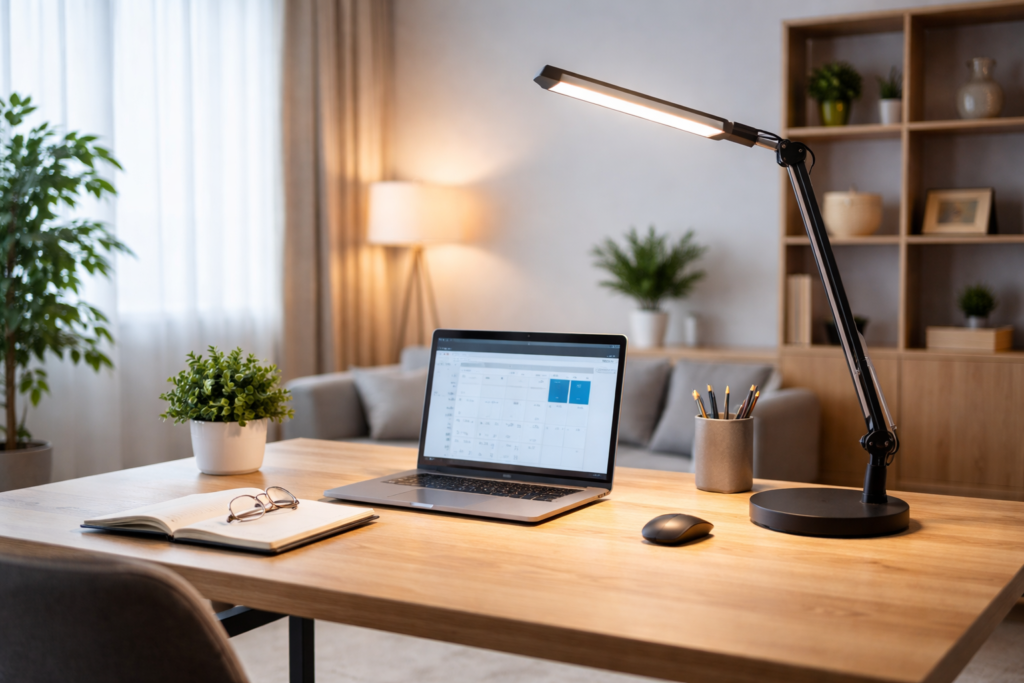
Ever felt blurry vision or headaches after working at your desk for hours? Many people assume their monitor is the problem, but the real cause is often poor desk lighting.
Choosing the best desk lighting for eye comfort is one of the most overlooked parts of a productive home office. Proper lighting reduces eye strain, prevents headaches, and improves focus during long work sessions.
Modern LED desk lamps with flicker-free technology can transform your workspace. The right lighting setup reduces glare, improves visibility, and creates a calm environment that supports productivity.
In this guide, you’ll learn how to build a complete home office lighting setup that protects your eyes and helps you stay focused all day.
Key Takeaways
- Choose flicker-free LED desk lamps to reduce eye strain
- Use layered lighting to balance brightness in your workspace
- Position lamps correctly to avoid screen glare
- Adjust color temperature for better visual comfort
- Combine task lighting and ambient lighting for productivity
Why Proper Desk Lighting Is Critical for Eye Health and Productivity

Bad lighting is one of the most common causes of eye fatigue in home offices. When lighting is too dim or too bright, your eyes must work harder to focus.
Common problems caused by poor desk lighting include:
- Eye strain
- Headaches
- Blurry vision
- Reduced concentration
Good lighting creates a comfortable visual environment, allowing you to work longer without discomfort.
If you spend long hours working at a desk, you may also want to learn how to sit without lower back pain while working at a desk.
Understanding Different Types of Desk Lighting for Your Home Office
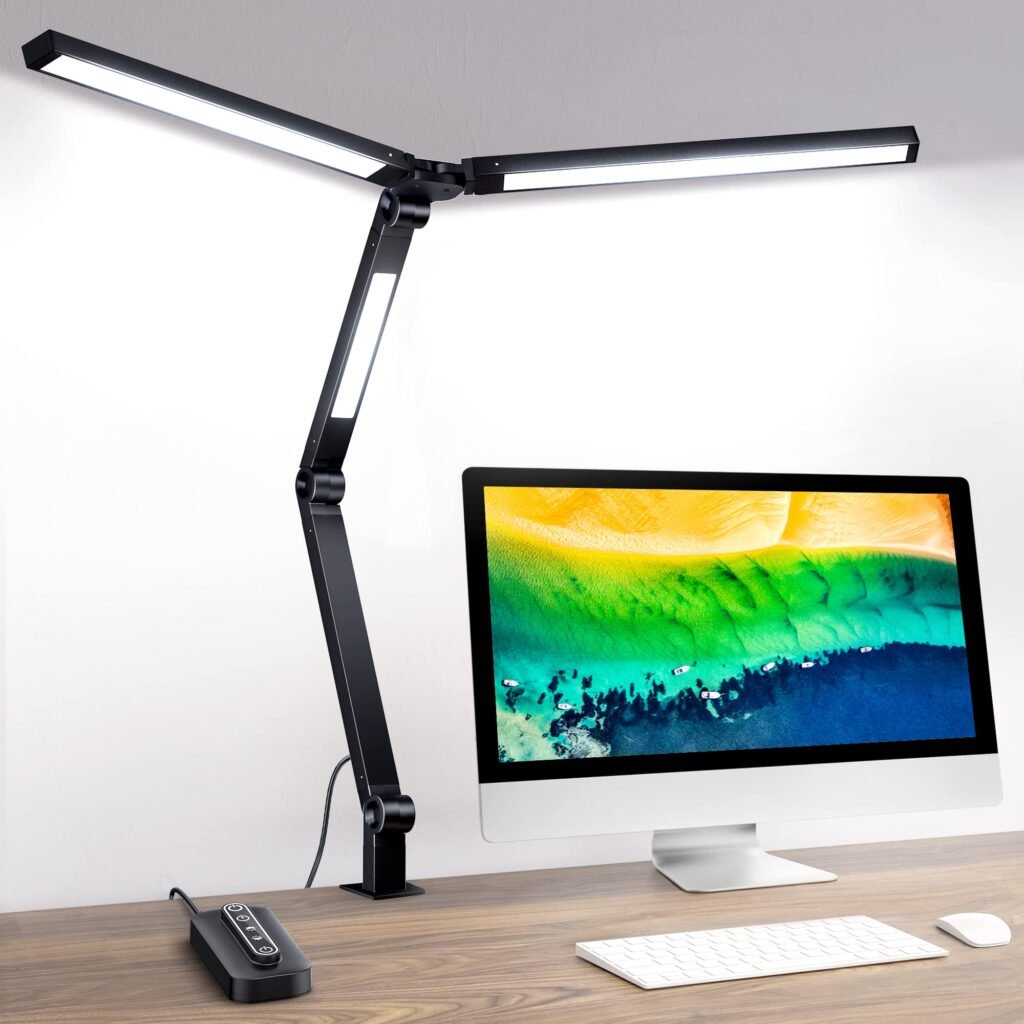
The best workspaces combine multiple types of lighting rather than relying on just one lamp.
Task Lighting for Focused Work
Task lighting shines directly on your work surface.
Benefits include:
- Better visibility
- Reduced eye strain
- Improved concentration
Adjustable LED desk lamps are ideal because you can direct the light exactly where you need it.
Ambient Lighting for Overall Brightness
Ambient lighting illuminates the entire room.
Examples include:
- Ceiling lights
- Floor lamps
- wall lighting
Ambient lighting prevents strong contrast between the screen and the surrounding room.
Specialized Lighting Options
Some modern setups include additional lighting solutions such as:
- Monitor light bars
- Clamp desk lamps
- LED light panels
These lighting options help reduce glare and improve overall visual comfort.
If you want to improve your full workstation comfort, you may also want to read our guide on the ultimate ergonomic desk setup for productivity.
Key Features That Make the Best Desk Lighting for Eye Comfort
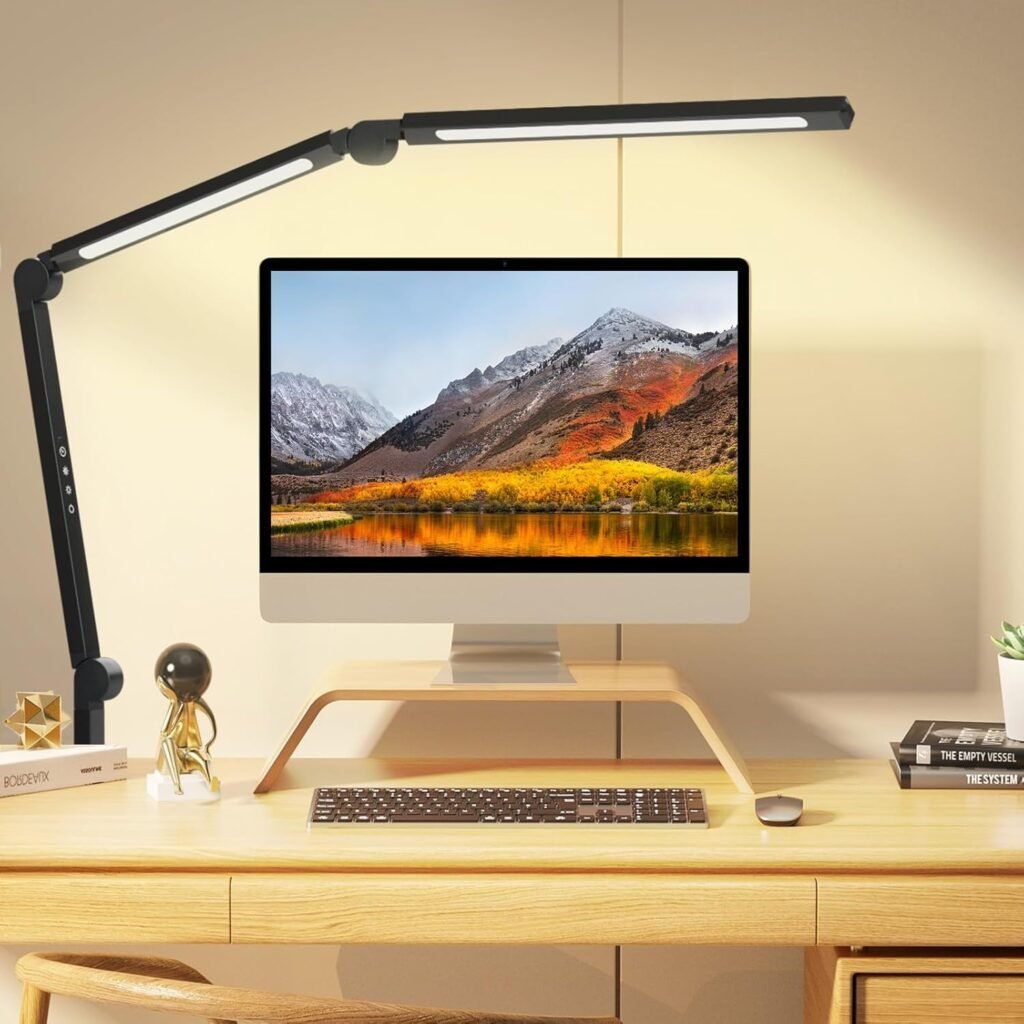
When choosing a desk lamp, several important features make a major difference in eye comfort.
Color Temperature
Color temperature determines how warm or cool the light appears.
Typical ranges:
- 2700K–3000K: warm light
- 3000K–4000K: neutral light (best for offices)
- 5000K+: cool white light
Neutral white light is usually best for long work sessions.
Brightness Control
Look for lamps with adjustable brightness levels.
This allows you to:
- reduce light at night
- increase brightness for reading
- avoid eye strain during long tasks
Flicker-Free Lighting
Cheap lights often flicker slightly, which can cause:
- headaches
- eye fatigue
- reduced focus
Modern LED desk lamps use flicker-free technology to prevent this problem.
Adjustable Design
An adjustable lamp arm allows you to position lighting exactly where needed.
This helps prevent glare on your screen and creates a comfortable viewing angle.
How to Create the Perfect Home Office Lighting Setup
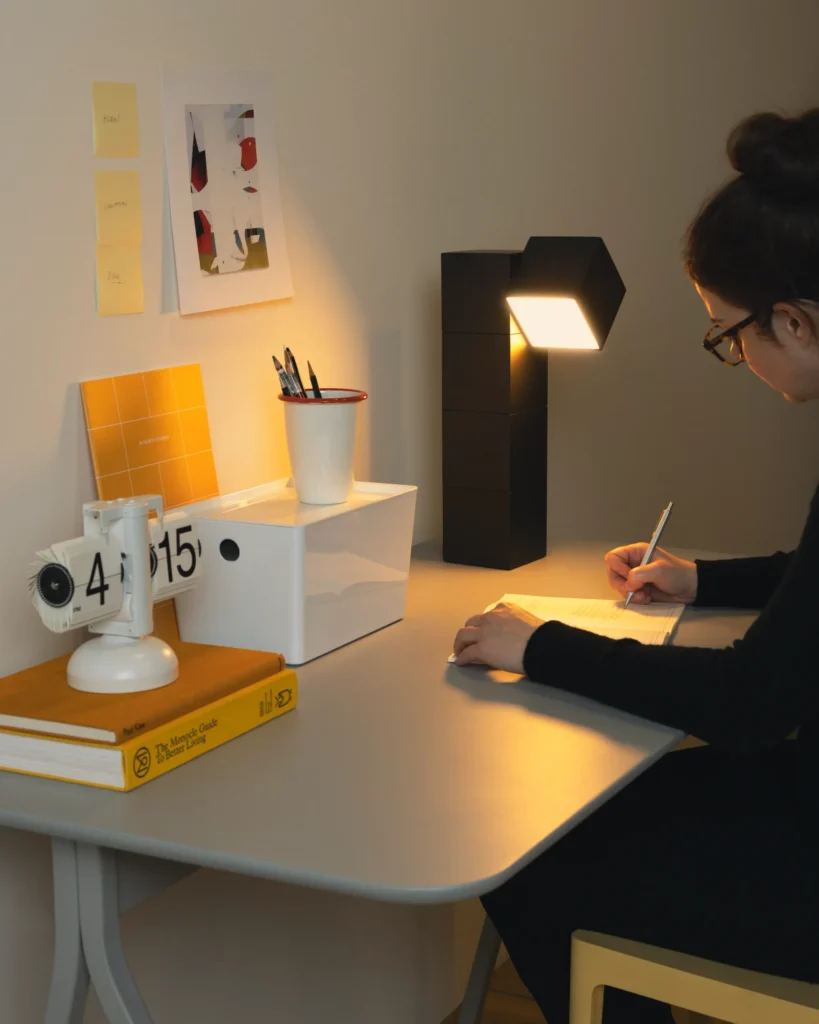
Use Layered Lighting
The best workspaces combine multiple lighting sources.
A balanced setup includes:
- Task lighting for work surfaces
- Ambient lighting for the room
- Natural light when available
Position Lamps Carefully
Proper lamp placement prevents glare and shadows.
Tips:
- Place lamps slightly to the side of your monitor
- Avoid positioning lights directly in your line of sight
- Use adjustable arms to fine-tune lighting direction
Maximize Natural Light
Natural daylight is excellent for eye comfort.
Try to:
- place your desk near a window
- use sheer curtains to soften sunlight
- adjust blinds during bright hours
Natural light can dramatically improve energy and focus during the workday.
Comparing Desk Lighting Options
| Lighting Type | Pros | Cons |
|---|---|---|
| LED Desk Lamps | Energy efficient, long lifespan, adjustable brightness | Higher initial price |
| Incandescent Lamps | Warm natural light | High energy usage |
| Monitor Light Bars | Reduce screen glare | Limited adjustability |
LED desk lamps are usually the best overall choice for modern home offices.
Practical Buying Tips for Eye-Friendly Workspace Lighting
Before buying a desk lamp, consider these factors:
Budget
Desk lamps range from $20 to $200+ depending on quality and features.
Energy Efficiency
LED lamps use less electricity and last significantly longer than traditional bulbs.
Build Quality
Look for:
- strong adjustable arms
- stable bases
- solid construction
A well-built lamp can last for years.
Conclusion
Creating the right home office lighting setup is one of the easiest ways to improve productivity and protect your eye health.
The best desk lighting combines:
- flicker-free LED technology
- adjustable brightness
- balanced ambient lighting
- proper lamp placement
Investing in a quality desk lamp and thoughtful lighting design can significantly improve comfort during long work sessions.
If your workspace causes discomfort, it also helps to learn how to sit properly to reduce back pain while working at a desk.
Small adjustments to your workspace can make a big difference in both comfort and productivity.
Disclaimer
MarketPlazaNow.com participates in affiliate programs and may earn a commission from qualifying purchases. This content is for informational purposes only and should not be considered medical or professional advice.