Many people think they lose focus in the afternoon because they’re tired.
Very often… it’s actually their lighting.
If your eyes feel dry, your head hurts behind your forehead, or your vision feels blurry after working on your computer — poor desk lighting is usually the real reason. Bad lighting forces your eyes to constantly adjust, and that drains your mental energy fast.
The right desk lamp doesn’t just make your workspace look nicer.
It directly affects focus, comfort, headaches, and productivity.
In this guide, you’ll learn exactly how to choose desk lighting that protects your eyes and helps you work longer without fatigue.
Key Takeaways
- Adjustable brightness prevents eye strain
- Side lighting eliminates monitor glare
- LED lamps are best for long work sessions
- Flicker-free lighting reduces headaches
- Color temperature matters more than brightness
- Flexible arms let you position light correctly
Why Proper Desk Lighting Matters

Bad lighting makes your eyes work harder than your brain.
Your eyes constantly try to compensate for:
• glare
• shadows
• harsh brightness
• dark rooms with bright screens
This causes:
- headaches
- burning eyes
- blurry vision
- loss of focus
When lighting is correct, your eyes relax.
When your eyes relax, your brain can concentrate.
Good lighting works even better when combined with other home office accessories that support posture and comfort during long work sessions.
Types of Desk Lighting (What Actually Works)
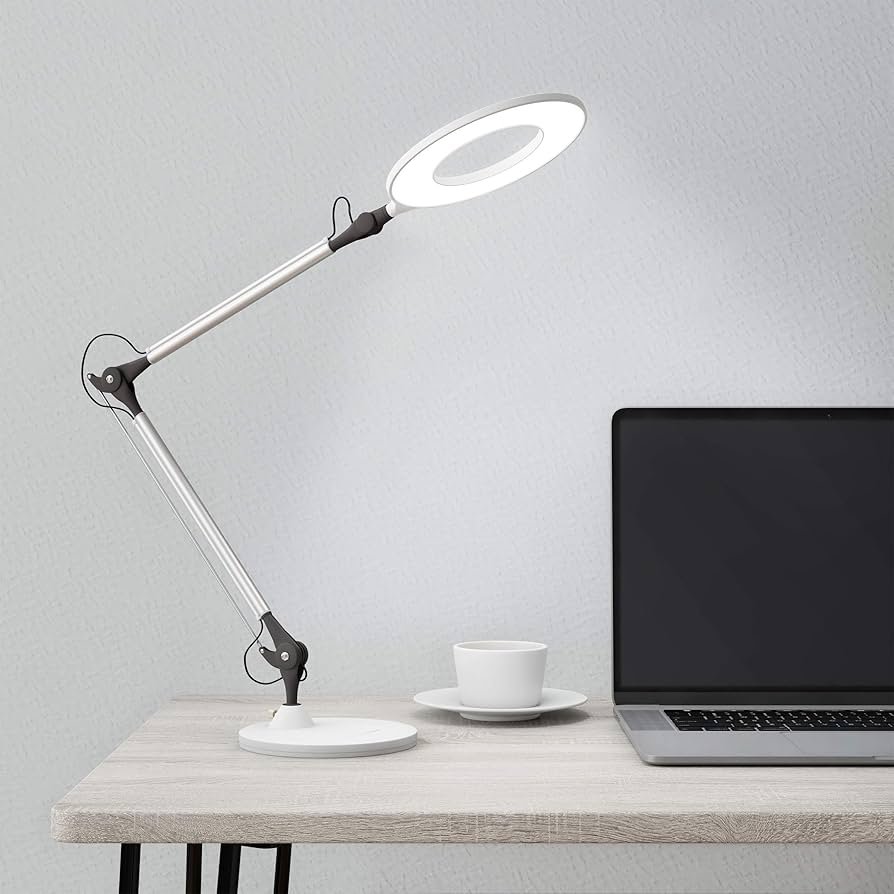
1. Adjustable Task Lamps
These are the best all-around choice.
They let you aim light exactly at your keyboard or notebook without shining into your eyes.
Best for: daily computer work
2. Monitor Light Bars
These sit on top of your monitor and shine light downward onto your desk.
They reduce the contrast between a bright screen and a dark room — a major cause of headaches.
Best for: long computer sessions
3. Architect / Swing Arm Lamps
These have long adjustable arms and a heavy base.
They’re excellent if you write, draw, or review papers at your desk.
Best for: detailed work and paperwork
4. Clamp-On Lights
These attach directly to a desk or shelf.
They’re simple and cheap but still effective.
Best for: small desks
Features You MUST Look For (Very Important)
Dimmable Brightness
Your eyes need different brightness in morning vs night.
Too bright = headaches
Too dark = eye strain
Always choose adjustable brightness.
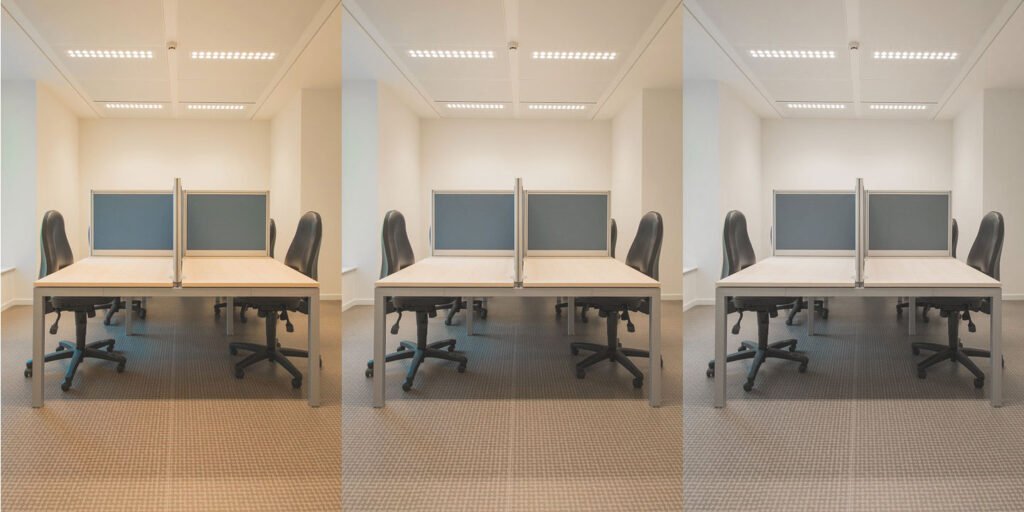
Adjustable Color Temperature
This matters more than people realize.
- Warm light → relaxing
- Neutral light → comfortable
- Cool light → focus
Flexible Positioning
You should be able to move the light beside your monitor — not directly in front of you.
Anti-Glare Diffused Light
Frosted covers or diffusers soften the light and prevent harsh shadows.
LED vs Traditional Bulbs
LED lamps are the clear winner.
| Feature | LED | Incandescent/Fluorescent |
|---|---|---|
| Energy use | Low | High |
| Heat | Cool | Hot |
| Lifespan | Very long | Short |
| Eye comfort | Better | Worse |
LED lights last years and don’t flicker — flicker is a major hidden cause of headaches.
Understanding Color Temperature (This Changes Everything)

Lighting color is measured in Kelvin (K).
Warm Light (2700K–3000K)
Best for evenings and relaxing work.
Neutral White (3500K–4500K)
Best overall office lighting.
This is the sweet spot.
Cool White (5000K–6500K)
Best for concentration but too harsh at night.
Correct Lamp Position (Most People Do This Wrong)
Your lamp should never shine directly into your eyes or onto your screen.
Follow this simple rule:
If right-handed → place lamp on LEFT
If left-handed → place lamp on RIGHT
Position the light at a side angle so it lights the desk, not the monitor.
This alone can stop daily headaches.
Quick Setup Tips
- Keep room lights on (never work in a dark room)
- Avoid light directly behind your monitor
- Match brightness to room lighting
- Use neutral white color temperature
- Adjust brightness at night
Final Thoughts
Desk lighting is one of the cheapest upgrades that makes the biggest difference.
A good lamp:
- improves concentration
- prevents eye strain
- reduces headaches
- increases productivity
You don’t need a complicated setup — you just need the right type of light placed correctly.
Fix your lighting, and your workday immediately feels easier.
Affiliate Disclosure
MarketPlazaNow.com participates in affiliate advertising programs designed to provide a means for sites to earn commissions by linking to products. We may earn a small commission from qualifying purchases at no extra cost to you.
Information Disclaimer
This article is for educational and informational purposes only and is not medical advice. If you experience persistent eye pain, migraines, or vision issues, consult a qualified healthcare professional.