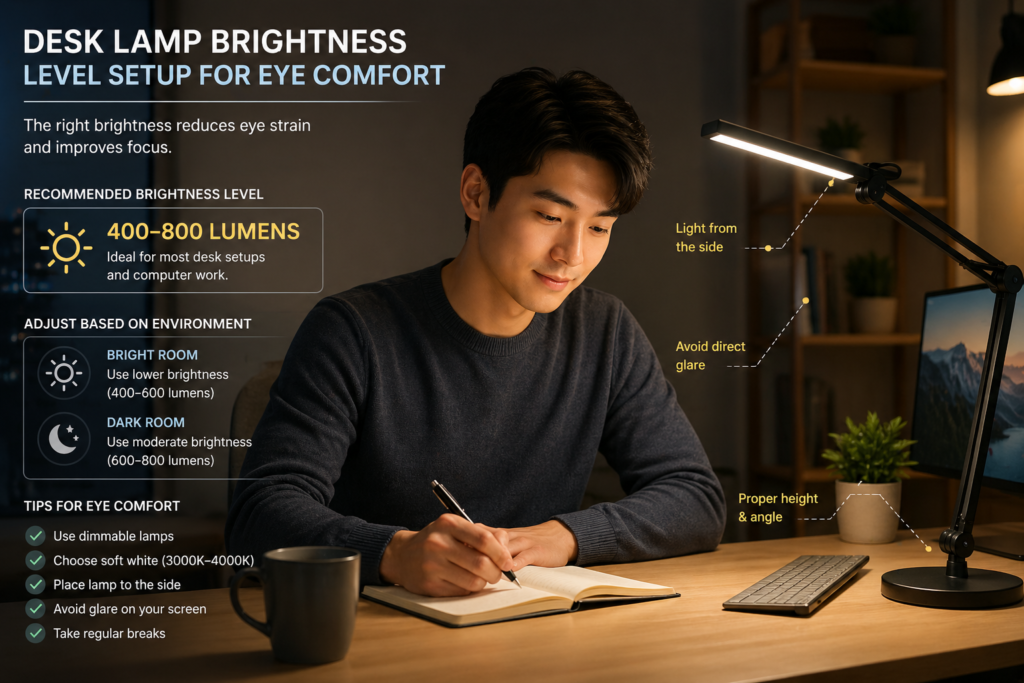
If your eyes feel tired, dry, or strained after long hours at your desk, your lighting might be the problem — not your screen.
One of the most overlooked factors is desk lamp brightness. Too dim, and your eyes strain to see. Too bright, and you get glare and discomfort.
In this guide, you’ll learn exactly how to choose the right brightness level for eye comfort and productivity.
💡 Why Desk Lamp Brightness Matters
Your eyes constantly adjust to light levels. When lighting is off, it forces your eyes to work harder.
Common issues caused by poor brightness:
- Eye fatigue
- Headaches
- Blurry vision
- Difficulty focusing
Balanced lighting reduces strain and keeps your workspace comfortable for hours.
🔆 Ideal Brightness for Desk Work
The sweet spot for most people:
👉 400–800 lumens
This provides enough light to:
- Reduce strain
- Prevent squinting
- Avoid harsh glare
🌓 Adjust Brightness Based on Your Setup
Bright Room
- Use lower brightness
- Prevents overexposure
Dark Room
- Use moderate brightness
- Avoid sharp contrast with your screen
🖥️ Combine Lamp + Screen Lighting
Your desk lamp should work with your monitor, not against it.
👉 For a full setup, follow this guide:
📍 Where to Place Your Lamp
Position matters just as much as brightness.
- Place lamp to the side of your monitor
- Avoid direct light into your eyes
- Reduce reflections on screen
👉 If your setup feels uncomfortable overall, fix it here:
🧠 Pro Tips for Eye Comfort
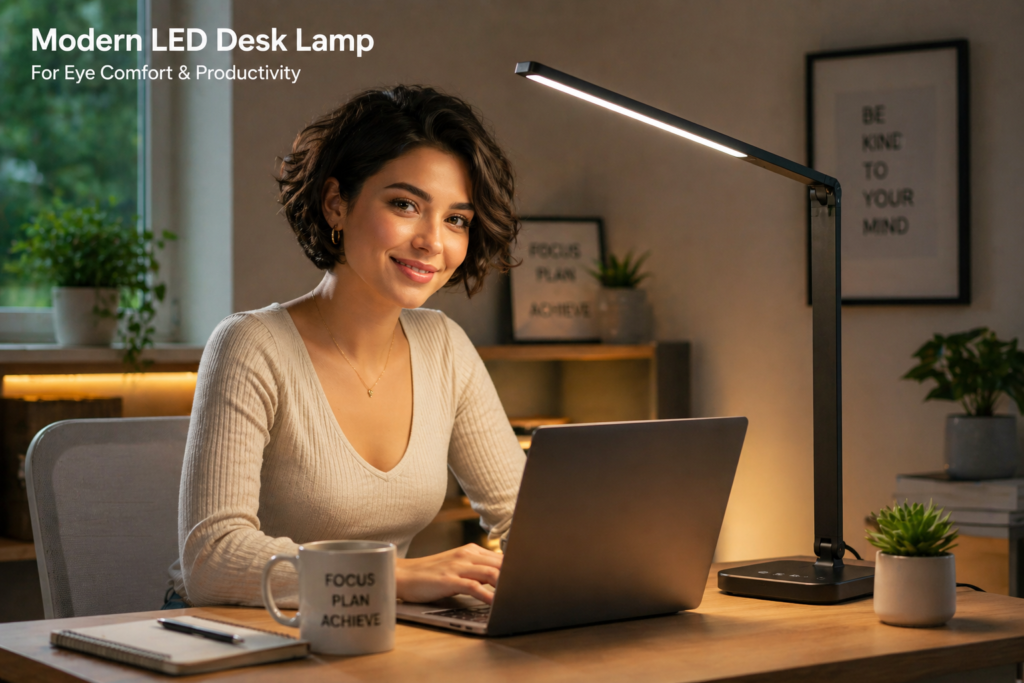
- Use dimmable lamps
- Choose soft white (3000K–4000K)
- Avoid flickering lights
- Use indirect lighting when possible
❌ Mistakes to Avoid
- Using overly bright LED lights
- Placing lamp directly behind screen
- Working in a completely dark room
- Ignoring glare on monitor
🏁 Final Thoughts
The right desk lamp brightness can completely change how your eyes feel at the end of the day.
A simple adjustment can mean:
✔ Less strain
✔ Better focus
✔ More productivity
This content is for informational purposes only. As an Amazon Associate, we may earn from qualifying purchases.