Creating a comfortable workspace is about more than just having a good chair or a large monitor. One of the most overlooked factors is lighting. If your desk lamp is positioned incorrectly, it can create glare, harsh shadows, and unnecessary eye strain.
Proper desk lamp height can make a noticeable difference in how comfortable your workspace feels throughout the day. When your lighting is positioned correctly, your eyes work less, your focus improves, and you can work longer without discomfort.
Even small lighting adjustments can transform a workspace. With the right setup, you can reduce eye fatigue, improve screen visibility, and make your desk a more productive place to work.
Why Desk Lamp Height Directly Affects Eye Comfort
The height of your desk lamp has a direct impact on eye comfort while working on a computer. When the light is placed too high or too low, it can cause glare, reflections on your screen, or uneven lighting across your workspace.
Over time, poor lighting can lead to headaches, tired eyes, and reduced productivity.
Proper ergonomic lighting helps your eyes stay relaxed while working. Instead of constantly adjusting to uneven light, your eyes remain comfortable and focused.
The Science Behind Lighting-Related Eye Strain
Eye strain often happens when your eyes must constantly adjust between bright and dark areas. Poor lighting forces your eyes to work harder, especially when reading text on a screen or focusing on small details.
When your desk lighting is balanced correctly, your eyes don’t have to constantly refocus. This reduces fatigue and helps you stay productive longer.
If you are working at a desk for long hours, lighting placement becomes just as important as posture. In fact, a well-designed workspace should combine good lighting with proper desk positioning.
Sentence example:
Proper lighting works best when combined with a comfortable desk setup, which is why many people also benefit from learning how to build an ergonomic home office setup for better posture and productivity.
How Incorrect Lamp Height Creates Glare and Shadows
Incorrect desk lamp placement can easily create glare or shadows that make your screen difficult to see.
Common problems include:
Glare on the monitor
When the lamp sits too high or directly behind the monitor, light reflects off the screen.
Shadows on your workspace
If the lamp is positioned incorrectly, your hands or keyboard may block the light.
Uneven brightness
Lighting that is too focused in one area can create contrast that tires your eyes.
The goal is to create soft, balanced lighting across your entire workspace.
Understanding the Ideal Desk Lamp Height for Computer Desk
Most lighting experts recommend placing your desk lamp 15 to 30 inches above the desk surface.
This range allows the light to spread evenly across your workspace without shining directly into your eyes or reflecting off your monitor.
For most computer desks:
• 15–20 inches works best for focused task lighting
• 20–30 inches works better for larger desks or multi-monitor setups
The correct height will depend on your desk layout and monitor position.
Factoring in Your Monitor Height and Desk Depth
Your monitor height plays a big role in where your lamp should sit.
If your monitor is tall or mounted on a stand, you may need to place the lamp slightly higher to prevent reflections on the screen.
Deep desks may also require lamps with longer adjustable arms so the light can reach the keyboard and work surface properly.
Sentence example:
Many people also improve lighting comfort by adjusting their desk layout using simple desk setup ideas that help reduce glare and improve workspace efficiency.
Measuring the Optimal Distance From Your Work Surface
A simple rule of thumb is to position the lamp so the light hits the keyboard or workspace area, not the monitor.
To test your lamp height:
- Sit in your normal working position
- Turn on your desk lamp
- Adjust the height until the light spreads evenly across your desk
- Make sure the light does not reflect directly into your eyes or screen
This simple adjustment can significantly improve eye comfort.
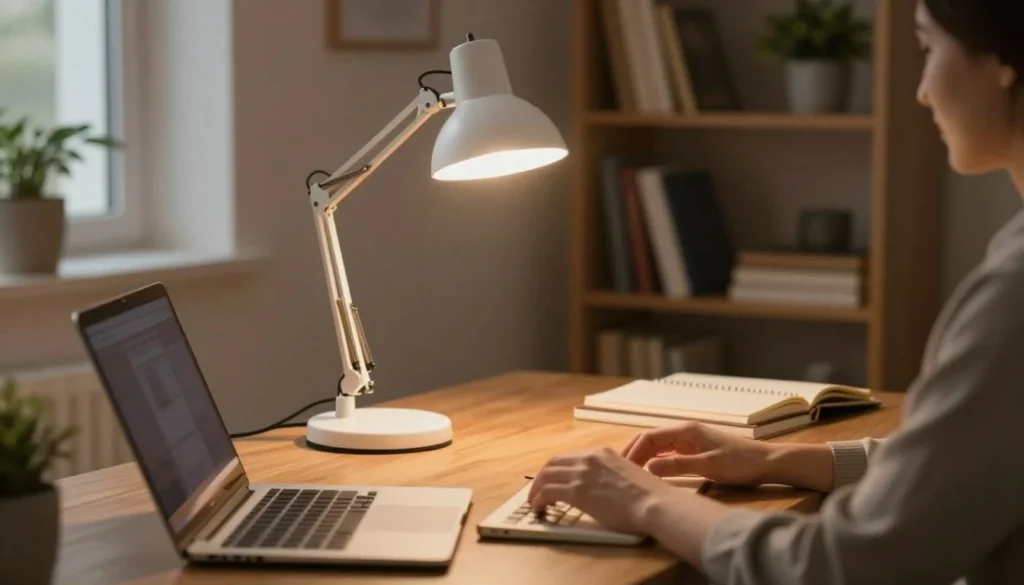
adjustable desk lamp angled toward keyboard area to provide balanced lighting for computer work
Types of Desk Lamps That Offer Height Flexibility
Different desk lamp designs provide different levels of adjustability. Choosing the right one can make it easier to maintain the correct lamp height.
Adjustable Arm Task Lamps
Adjustable arm lamps allow you to extend, raise, or lower the lamp depending on the task.
Pros
• Highly adjustable
• Great for focused lighting
• Easy to reposition
Cons
• Some models take up more desk space.
Swing Arm Desk Lamps
Swing arm lamps can move horizontally and vertically. This makes them useful for larger desks or shared workspaces.
Pros
• Wide range of movement
• Flexible positioning
Cons
• The arm may loosen over time if the lamp is frequently adjusted.
Clamp-On Lamps
Clamp-on lamps attach directly to the desk edge, saving valuable desk space.
Pros
• Space-saving design
• Flexible neck adjustment
Cons
• Not compatible with all desk types.
LED Panel Desk Lamps
LED panel lamps provide wide, even lighting across your workspace.
Pros
• Soft light distribution
• Energy efficient
Cons
• Slightly higher cost compared to basic desk lamps.
Key Features to Look for When Buying a Desk Lamp
When choosing a desk lamp for your computer desk, several features can improve comfort and usability.
Height Adjustability
A lamp with adjustable height allows you to control the light position and reduce glare.
Adjustable Color Temperature
Look for lamps that offer adjustable color temperatures between 2700K and 6500K. Cooler light improves focus, while warmer light helps reduce eye fatigue.
Dimmable Brightness
Brightness controls allow you to adjust lighting throughout the day as natural light changes.
Anti-Glare Diffusers
Diffusers soften harsh light and prevent reflections on your monitor.
Stable Base
A heavier base keeps the lamp stable and prevents it from tipping over when adjusted.
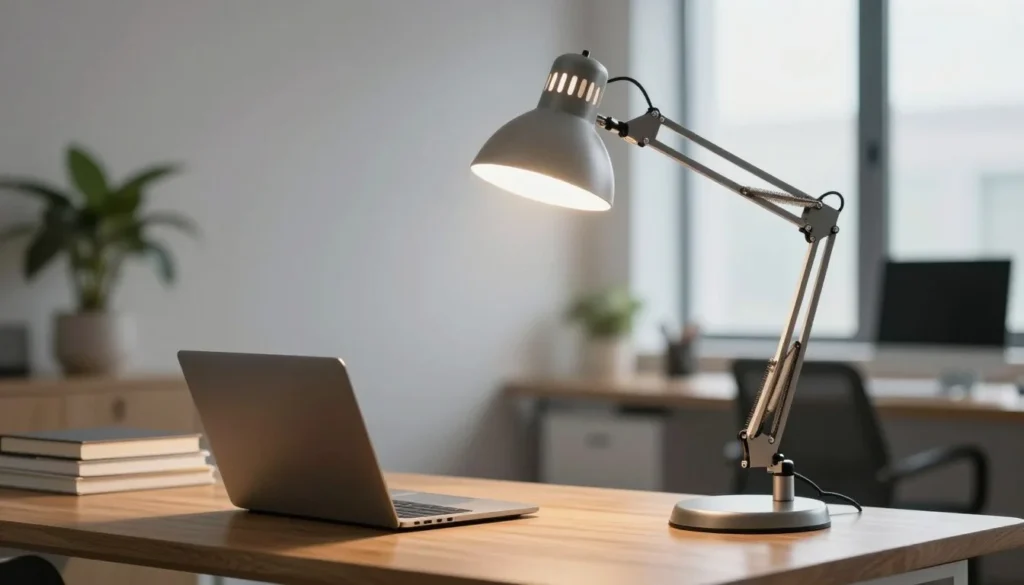
modern LED desk lamp providing balanced lighting for computer desk workspace
Practical Setup Tips to Reduce Eye Strain
Even the best desk lamp will not help if it is placed incorrectly. These simple setup tips can improve your lighting immediately.
Position the Lamp Opposite Your Dominant Hand
If you are right-handed, place the lamp on the left side of your desk. This prevents shadows from your writing hand.
Balance Task Lighting With Ambient Lighting
Your desk lamp should not be the only light source in the room. Combining task lighting with soft ambient lighting helps reduce contrast and eye fatigue.
Test Lamp Height Before Final Placement
Before finalizing your setup, experiment with different lamp heights to find the most comfortable lighting position.
Avoid Common Lighting Mistakes
Common lighting mistakes include:
• placing the lamp directly behind the monitor
• positioning the lamp too close to your eyes
• using extremely bright light in a dark room
When Multiple Light Sources Help
In some setups, using more than one light source can improve visibility and reduce eye strain.
For example:
• a desk lamp for focused lighting
• overhead lighting for general room brightness
• indirect lighting to soften shadows
This layered lighting approach creates a more comfortable workspace overall.
Conclusion
The correct desk lamp height can significantly improve comfort while working on a computer. When lighting is positioned properly, your workspace becomes easier on the eyes and more productive.
A desk lamp positioned 15 to 30 inches above your desk typically provides the best balance between brightness and glare control.
By adjusting lamp height, choosing the right type of desk lamp, and balancing lighting throughout the room, you can create a workspace that supports long hours of comfortable and focused work.
Small adjustments to your lighting setup today can lead to better comfort, fewer headaches, and improved productivity over time.
Disclaimer:
This article is for informational and educational purposes only. The tips provided are general workspace recommendations and should not replace professional medical or vision advice. If you experience persistent eye strain, headaches, or vision problems while working on a computer, consult a qualified healthcare professional or eye specialist.