Choosing the wrong light color can quietly cause eye strain, fatigue, and even headaches.
Many people don’t realize that warm vs cool lighting plays a major role in how comfortable your workspace feels.
Let’s break down which one is better for your eyes — and when to use each.
Warm vs Cool Lighting (Quick Breakdown)
- Warm light (2700K–3000K):
- Softer, relaxing
- Best for evenings
- Reduces eye strain
- Cool light (4000K–5000K):
- Brighter, energizing
- Better for focus during the day
- Can cause fatigue if too harsh
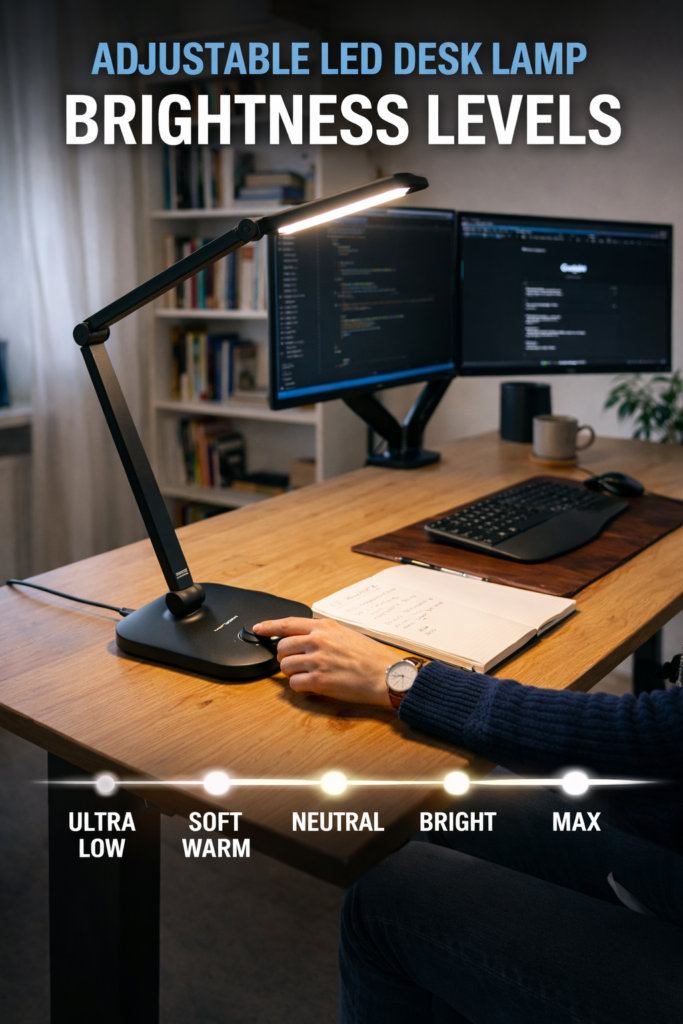
desk lighting color temperature warm vs cool comparison
Which Is Better for Eye Comfort?
For most people:
👉 Neutral light (3000K–4000K) is the best balance
Why?
- Not too harsh
- Not too dim
- Matches natural daylight
When to Use Warm Lighting
Use warm lighting when:
- Working at night
- Relaxing or reading
- Reducing screen fatigue before bed
Warm light helps your eyes relax and reduces overstimulation.
When to Use Cool Lighting
Use cool lighting when:
- Doing detailed work
- Working during daytime
- Need higher focus and alertness
But avoid overly harsh white light — it increases glare and strain.
Combine Lighting for Best Results
The best setup is not one light — it’s layered lighting.
Use:
- Desk lamp (adjustable tone)
- Ambient room lighting
- Screen brightness balance
👉 If your setup still feels uncomfortable, this guide shows how to fix your desk completely
Bonus Tip: Lamp Position Matters Too
Even perfect lighting color won’t help if your lamp is placed wrong.
👉 Fix your positioning here for immediate improvement
Final Thoughts
Warm vs cool lighting isn’t about choosing one — it’s about using the right one at the right time.
For most setups:
- Day = neutral/cool
- Night = warm
That balance is what keeps your eyes comfortable all day.
MarketPlazaNow.com participates in affiliate programs and may earn a commission from qualifying purchases. This content is for informational purposes only.