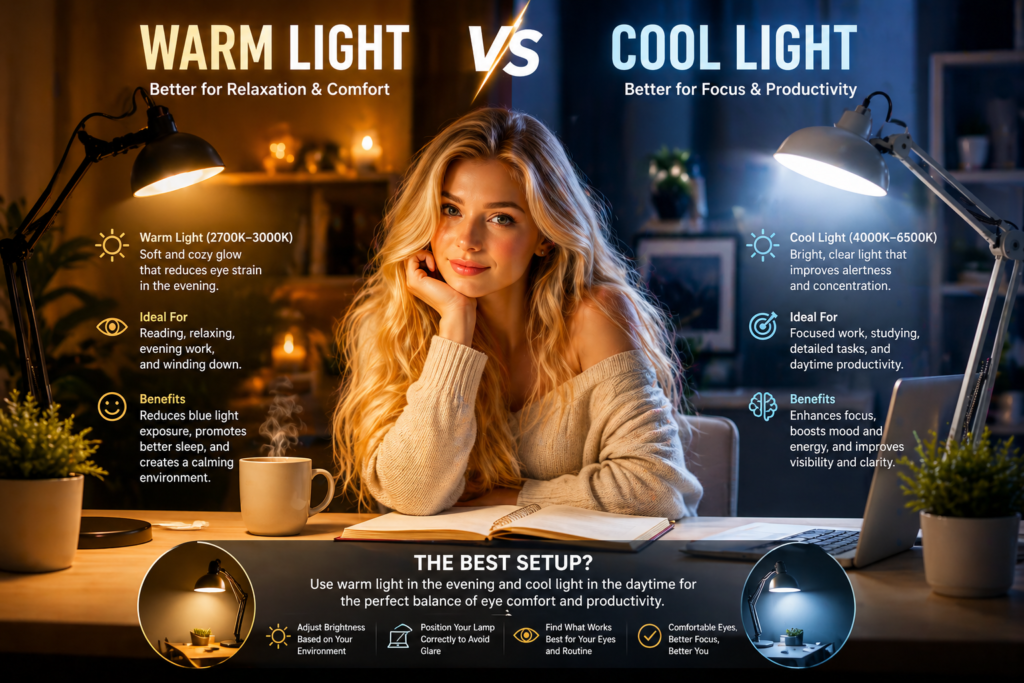
When it comes to reducing eye strain, brightness isn’t the only factor—light color matters just as much.
You’ve probably seen desk lamps with:
- Warm light (yellow/orange tone)
- Cool light (white/blue tone)
But which one is actually better for your eyes?
Let’s break it down.
What Is Warm Light?
Warm light has a soft yellow tone, similar to sunset lighting.
Best for:
- Relaxed environments
- Evening work
- Reducing harsh brightness
Benefits:
- Easier on the eyes at night
- Helps reduce glare
- Creates a comfortable atmosphere
What Is Cool Light?
Cool light is bright white or slightly blue.
Best for:
- Focused work
- Reading and productivity
- Daytime use
Benefits:
- Improves alertness
- Enhances visibility
- Better for detailed tasks
So Which Is Better for Eye Strain?
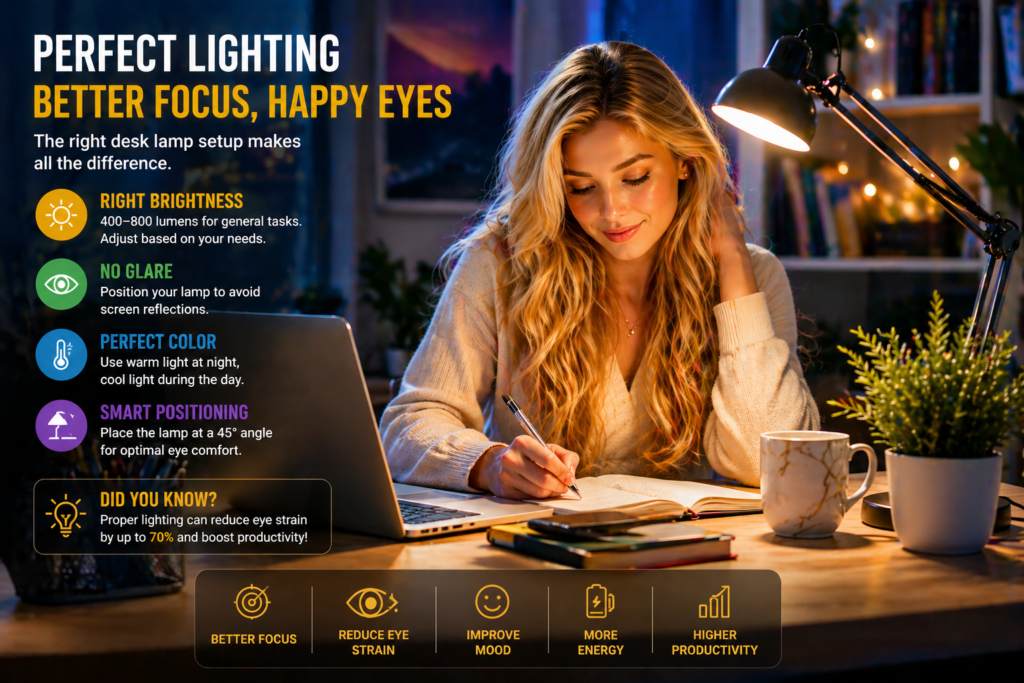
👉 The answer: You need both
The best setup uses:
- Cool light during the day
- Warm light at night
This prevents:
- Overstimulation at night
- Eye fatigue from harsh lighting
The Best Setup for Eye Comfort
Modern desk lamps allow you to switch between color temperatures.
Look for lamps with:
- 3000K (warm light)
- 4000K–5000K (neutral/cool light)
👉 If you’re choosing a lamp designed specifically to reduce eye strain, check this guide:
Combine Light Color With Proper Positioning
Even perfect lighting color won’t help if your lamp causes glare.
👉 This guide shows how to position your lamp correctly for maximum comfort:
Common Mistakes to Avoid ⚠️
- Using cool light at night (causes eye fatigue)
- Using only one color setting all day
- Ignoring brightness levels
- Placing lamp directly in line of sight
Ideal Setup for All-Day Comfort
For best results:
Morning / Day:
- Cool or neutral light
- Medium to high brightness
Evening:
- Warm light
- Lower brightness
This creates a natural lighting rhythm that reduces strain.
Final Thoughts
There’s no single “best” light color—only the right light for the right time.
When you combine:
- Proper brightness
- Correct light color
- Good positioning
You create a workspace that supports:
- Focus
- Comfort
- Long hours without eye fatigue
This post may contain affiliate links. If you purchase through these links, we may earn a small commission at no extra cost to you.