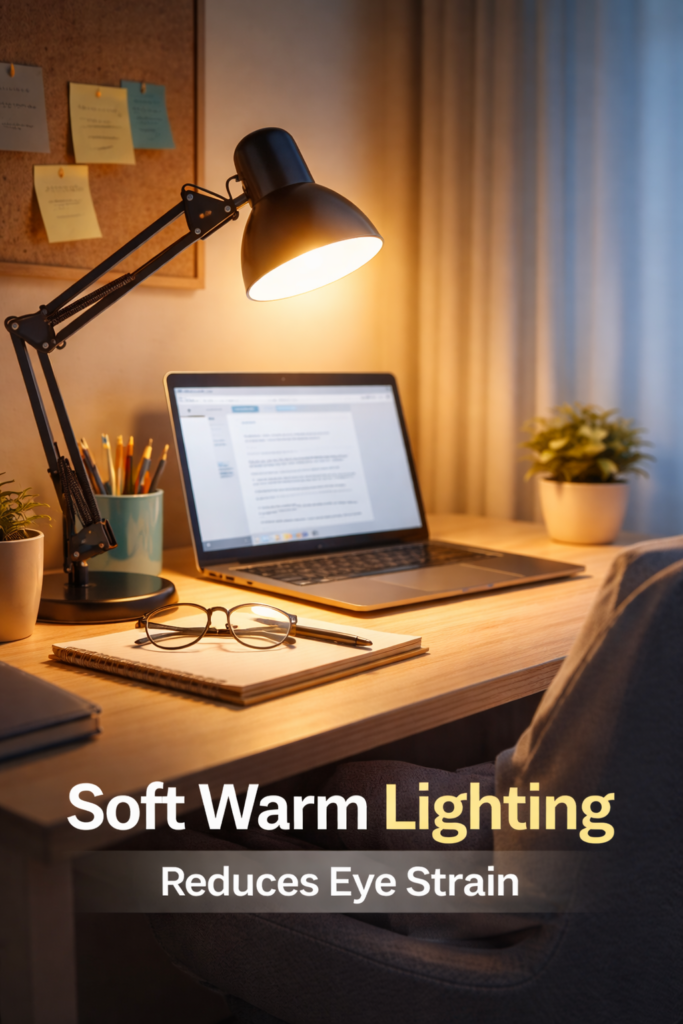
Discover the ideal desk lamp brightness for eye comfort. Reduce eye strain and improve focus with the right lighting setup.
If your eyes feel tired, dry, or strained after working at your desk, your lighting might be the problem—not your screen.
One of the most overlooked factors in a comfortable workspace is desk lamp brightness. Too dim, and your eyes struggle. Too bright, and you create glare and fatigue.
The good news? Fixing this is simple once you know the right balance.
What Is the Best Desk Lamp Brightness for Eye Comfort?
The ideal desk lamp brightness falls between:
- 400 to 800 lumens for general desk work
- Up to 1,000 lumens for detailed tasks (reading, writing, design work)
This range gives your eyes enough light without forcing them to overwork or adjust constantly.
💡 The key is balanced lighting, not just brightness.
Why Too Bright or Too Dim Causes Eye Strain
🔻 Too Dim:
- Your eyes work harder to focus
- Leads to fatigue and headaches
- Reduces productivity over time
🔺 Too Bright:
- Causes glare on screens
- Creates harsh contrast
- Leads to squinting and irritation
👉 The goal is soft, even lighting that blends with your screen brightness.
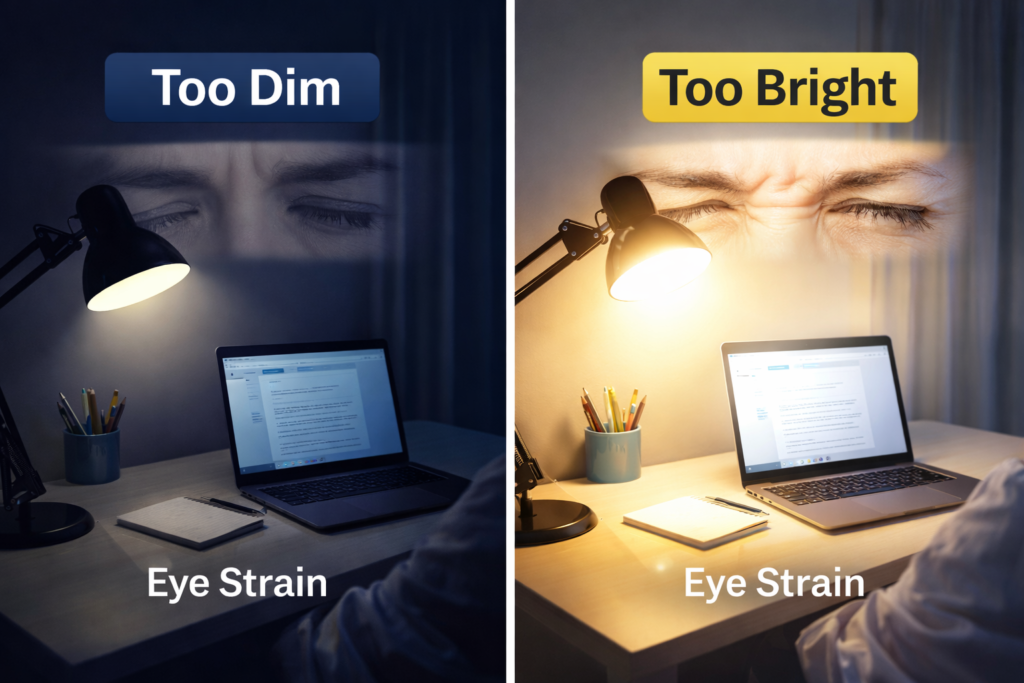
comparison of dim vs overly bright desk lamp lighting causing eye strain
How to Set the Perfect Desk Lamp Brightness
Here’s a simple setup that works for almost anyone:
✔️ Step 1: Match Screen Brightness
Your desk lamp should not overpower your monitor.
👉 A good rule:
If your screen looks “washed out,” your lamp is too bright.
✔️ Step 2: Use Adjustable Brightness
Choose a lamp with dimming settings so you can adjust throughout the day.
Morning → slightly brighter
Night → softer, warmer light
✔️ Step 3: Avoid Direct Eye Exposure
Position your lamp so the light:
- Hits your desk
- NOT your eyes
- NOT directly into your screen
👉 If you’re unsure about positioning, this guide will help you fix it properly
Warm vs Cool Light: What’s Better?
- Warm light (3000K–4000K):
Best for long hours and relaxation - Cool light (5000K+):
Better for focus but can feel harsh over time
👉 For most people working long hours, neutral to warm light is ideal.
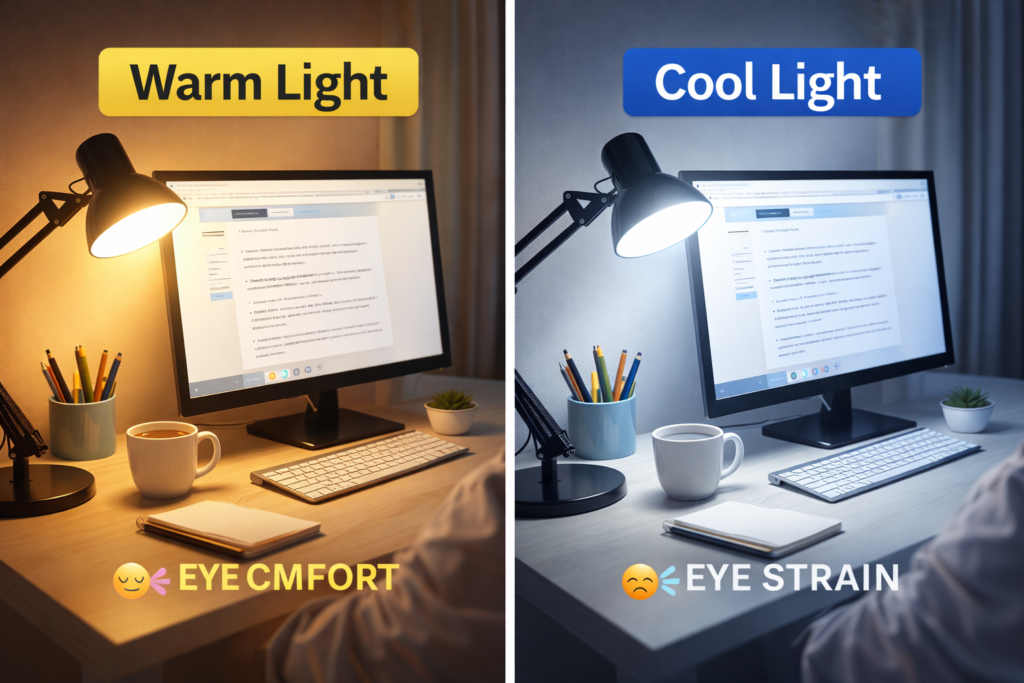
desk setup comparison warm light vs cool light for eye comfort
Common Mistakes That Cause Eye Fatigue
Avoid these if you want a comfortable setup:
❌ Using only overhead lighting
❌ Placing lamp directly behind screen
❌ Using maximum brightness all the time
❌ Ignoring screen brightness settings
👉 A full workspace adjustment can make a huge difference in comfort
Best Features to Look for in a Desk Lamp
If you’re upgrading your setup, look for:
- Adjustable brightness levels
- Flicker-free LED lighting
- Anti-glare design
- Flexible arm or positioning
- Warm-to-cool light settings
These features help you customize your lighting instead of fighting it.
Final Thoughts
The best desk lamp brightness isn’t about going brighter—it’s about going smarter.
When your lighting is properly balanced:
- Your eyes feel relaxed
- Your focus improves
- You can work longer without discomfort
Small adjustments like this can completely transform your workspace.
This post may contain affiliate links. If you purchase through these links, we may earn a small commission at no extra cost to you.