Choosing the right desk lamp isn’t just about style—it’s about protecting your eyes during long hours of work or screen time. One of the biggest factors people overlook is brightness.Too dim? You strain to see.
Too bright? You deal with glare and fatigue.
Let’s break down how to choose the perfect desk lamp brightness for eye comfort so you can work longer without discomfort.
Why Desk Lamp Brightness Matters
Your eyes constantly adjust to light levels. When your lighting is off, your eyes work harder than they should.
Common problems caused by poor brightness:
- Eye strain and fatigue
- Headaches after long work sessions
- Difficulty focusing on screens or documents
- Increased glare on your monitor
The goal is simple: balanced, comfortable lighting that matches your environment.
What Is the Ideal Brightness for a Desk Lamp?
Most experts recommend:
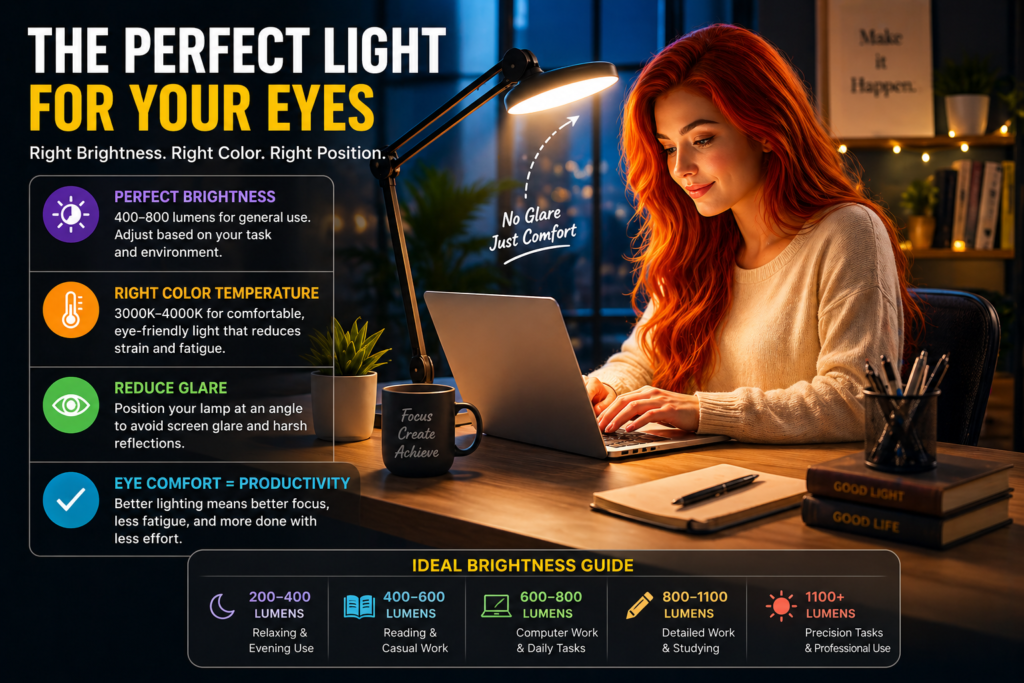
- 400–800 lumens for general desk use
- 800–1100 lumens for detailed work (reading, writing, design)
But brightness alone isn’t enough—it needs to be adjustable.
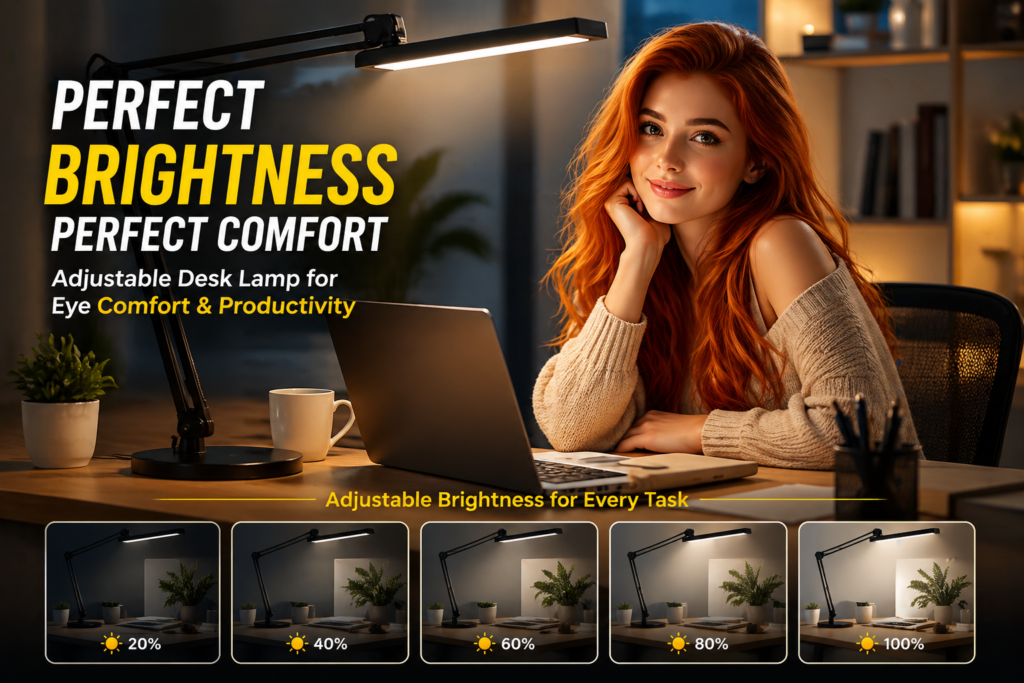
Adjustable Brightness Is Key
A fixed-brightness lamp limits you.
Look for lamps with:
- Multiple brightness levels
- Touch or dial controls
- Smooth dimming (not just 3 presets)
This lets you:
- Lower brightness at night
- Increase it during daytime work
- Reduce strain based on your task
How to Match Brightness With Your Workspace
Daytime Setup
If you have natural light:
- Use medium brightness (400–600 lumens)
- Avoid overpowering sunlight
Night Setup
When your lamp is your main light:
- Use higher brightness (700–1000 lumens)
- Pair with ambient room lighting to avoid contrast strain
Avoid This Common Mistake ⚠️
Many people use a bright lamp in a dark room.
This creates:
- Harsh contrast
- Increased eye fatigue
- Glare on screens
👉 Your lamp should blend with your environment, not fight it.
Combine Brightness With Proper Positioning
Even the perfect brightness won’t help if your lamp is placed wrong.
👉 This guide shows the correct placement to reduce glare and eye strain:
Best Features for Eye-Friendly Brightness
When choosing a desk lamp, look for:
- Adjustable brightness levels
- Anti-glare design
- Diffused light (soft spread, not harsh beam)
- Flicker-free LED technology
These features work together to create a comfortable lighting experience.
Final Thoughts
The right brightness can completely change how your workspace feels.
Instead of dealing with:
- Tired eyes
- Constant squinting
- Headaches
You get:
- Clear vision
- Better focus
- Comfortable long work sessions
A small adjustment in brightness can make a big difference in your daily productivity and eye health.
This post may contain affiliate links. If you purchase through these links, we may earn a small commission at no extra cost to you.